



"What Are We?": How to Have the Relationship Talk Successfully

The “what are we?” talk is a conversation about defining your relationship, including whether you're dating casually, exclusively, or moving toward a committed relationship. The best time to have it is when your connection becomes consistent, feelings deepen, or uncertainty about where you stand starts causing stress. Approach the conversation calmly, explain how you feel, and ask the other person what they want from the relationship.
There’s a moment many people recognize: nothing is openly wrong, but something feels unfinished. You’re seeing each other regularly. You share parts of your life. And yet, there’s a quiet question hovering in the background, one you keep putting off because saying it out loud might change things.
When to Have the Relationship Talk (Timing Is Key)
You should consider having the relationship talk when your connection becomes consistent and you want clarity about exclusivity, commitment, or where the relationship is heading. There is no universal number of dates or weeks you need to wait.
Signs it may be time to define the relationship include:
- You see each other consistently.
- You've stopped dating or swiping for other people.
- You're becoming emotionally invested.
- You make future plans together.
- You want to know whether you're exclusive.
- Uncertainty about the relationship is starting to bother you.
For many people, the question becomes louder once exclusivity starts happening implicitly. You stop swiping, you assume weekends together, you notice a flicker of discomfort when they mention someone else. These moments don't demand immediate answers, but they often signal when to have the "what are we" talk, when emotional investment has quietly grown. For those dating with marriage in mind, that clarity matters even more, and the sooner it comes, the better for both people.
Another cue is consistency. If communication feels steady, time together feels expected rather than tentative, and you’re beginning to picture them in future plans, that’s often the moment a “what are we” relationship starts to take shape. Not because you need reassurance, but because clarity would let you relax into what’s already unfolding.
It may still feel too early if the connection is sporadic, emotionally light, or undefined in practice. In those cases, readiness matters more than courage. The right time often comes when you can ask when to have the talk, relationship-wise, without bracing for the answer - curious, grounded, and open to learning where you stand.
How to Ask “What Are We?” Without Being Awkward
Awkwardness tends to come from tension, not from the question itself. When the conversation carries pressure or urgency, it’s easy for both people to feel on edge. When it comes from calm curiosity, it often feels surprisingly simple.
You can start simply: “I really enjoy spending time with you, and I'd like to understand how you see our relationship. What are you looking for between us?” Another option is: “We've been seeing each other for a while, and I wanted to check in about where we both see this going.”
If you’re thinking about how to ask ‘‘what are we’’, start with the setting. A quiet, private moment works better than a charged or rushed one. The conversation doesn’t need a dramatic lead-in. It often fits naturally into moments where you’re already talking honestly.
Tone matters more than phrasing. This is often what makes how to have the “what are we” conversation feel manageable rather than tense. You’re sharing where you are and inviting the other person to do the same. This approach makes how to bring up the relationship talk feel collaborative instead of confrontational.
When people approach this kind of talk with openness — especially when thinking about how to ask someone “what are we” — they tend to hear clearer answers. It helps to think of it as a way to name what’s already forming, rather than trying to define it all at once.
How to Ask a Guy or Girl “What Are We?”
Even when the question is the same, the conversation can unfold differently depending on who you’re talking to. Not because men and women follow fixed communication rules, but because every “what are we” relationship develops its own emotional rhythm. Paying attention to that rhythm often matters more than choosing the perfect wording.
Some people respond best to clarity and directness. Others need a bit more emotional context before they can answer honestly. Tailoring the conversation isn’t about changing yourself — it’s about noticing how openness already works between you. That awareness often shapes how to ask someone “what are we?” in a way that feels natural rather than disruptive.
How to Ask a Guy “What Are We?”
When thinking about how to ask a guy “what we are”, clarity tends to help. Not because the question needs to be blunt, but because over-softening it can blur the point. Choosing a low-pressure moment — when you’re already talking easily, not rushing or emotionally charged — often makes the conversation feel steadier.
Many people worry about how to ask him “what we are” without sounding demanding. Focusing on the connection as it exists right now can help. Often, the conversation feels easier when you stay close to what’s already happening between you. What feels consistent. What you enjoy. What has started to matter.
Often, these questions surface once something steady has already formed. When there’s ease in the connection, figuring out how to have the relationship talk with a guy becomes part of paying attention to what’s already there, rather than introducing something new.
For many women, a similar tension shows up when they start thinking about how to ask a man what we are, especially in relationships that have been moving quietly rather than explicitly.
How to Ask a Girl “What Are We?”
For many people, how to ask a girl “what are we?" involves emotional transparency. Sharing what the relationship has started to mean to you — and why clarity matters — often creates a sense of safety rather than pressure.
This doesn’t require big declarations or future promises. It’s usually enough to name how you feel in the present and what you’re hoping to understand. When the conversation centers on feelings and direction, it tends to feel like a continuation of intimacy rather than a test.
How to Ask “What Are We” Over Text and In Situationships
Sometimes the conversation doesn’t happen simply because there’s no shared moment to have it. Different schedules, distance, connections that live mostly on screens. In those cases, learning how to ask “what are we” over text is the only realistic option.
For some women, especially when they’re unsure how to ask a guy “what are we”, text can feel like a safer place to begin the conversation.
Text removes some immediate awkwardness, but it also strips away tone and context. That’s why messages about relationship status tend to feel heavier than they need to. A single line can sound abrupt or loaded, even when the intention is calm.
If you’re wondering how to tell someone you want a relationship over text, it often helps to slow the message down. Naming what’s already there — the consistency, the connection, the time you’ve spent gives the question somewhere to land. It turns an abstract request into a shared reflection.
When the conversation starts this way, it usually feels simpler. Less like you’re asking for something, more like you’re naming what’s already happening. That shift often matters when you’re thinking about how to bring up relationship status without making it heavier than it needs to be.
How to Ask for Clarity in a Situationship
To ask for clarity in a situationship, explain what you want to understand without demanding a particular answer. Ask whether the other person sees the connection as casual, exclusive, or potentially becoming a committed relationship.
Situationships usually don’t start with confusion. They start with ease — low expectations, a sense that nothing needs to be defined yet. Over time, that openness can quietly turn into emotional limbo especially when one person begins to care more deeply.
You feel it in the mental back-and-forth. Wondering how to interpret mixed signals. Adjusting your expectations without ever saying so out loud. This is often when the question of how to ask for clarity in a situationship starts to feel unavoidable. Researchers at the Institute for Family Studies suggest that ambiguity can feel emotionally safer than commitment early on, because it delays the vulnerability that comes with naming the relationship.
Figuring out how to ask your situationship “what you are”, or even how to ask him what we are doesn’t mean forcing a label or accelerating the connection. It means acknowledging that uncertainty has started to cost you something emotionally. That awareness isn’t dramatic, it’s self-respect.
Clarity doesn’t guarantee alignment. Sometimes it reveals a mismatch. But it almost always replaces quiet anxiety with something more solid, information you can actually respond to.
How to Respond to “What Are We?” (If They Ask You)
Being asked the question can feel just as destabilizing as asking it. Even if you sensed it coming. Even if you’ve thought about it privately.
If you’re unsure how to respond to “what are we”, pausing is allowed. Your answer can be as simple as: “I see this becoming a relationship and I'd like to keep building it,” “I'm enjoying what we have, but I'm not ready for a committed relationship yet,” or “I'm still figuring out what I want, and I don't want to give you an answer that isn't honest.”
Knowing how to answer “what are we" means being truthful about your capacity, your pace, and what the connection currently means to you. Softening the truth too much often creates more confusion later on.
The most grounding responses tend to stay close to the present. Where you are now. What you feel now. What you’re open to exploring or not.
Finding Clarity Faster with Kismia
One reason the "what are we" talk feels so emotionally loaded is that it often comes late, after weeks or months of reading between the lines. If you're ready to skip that ambiguity, dating for serious relationships can help you connect with people who are looking for something meaningful.
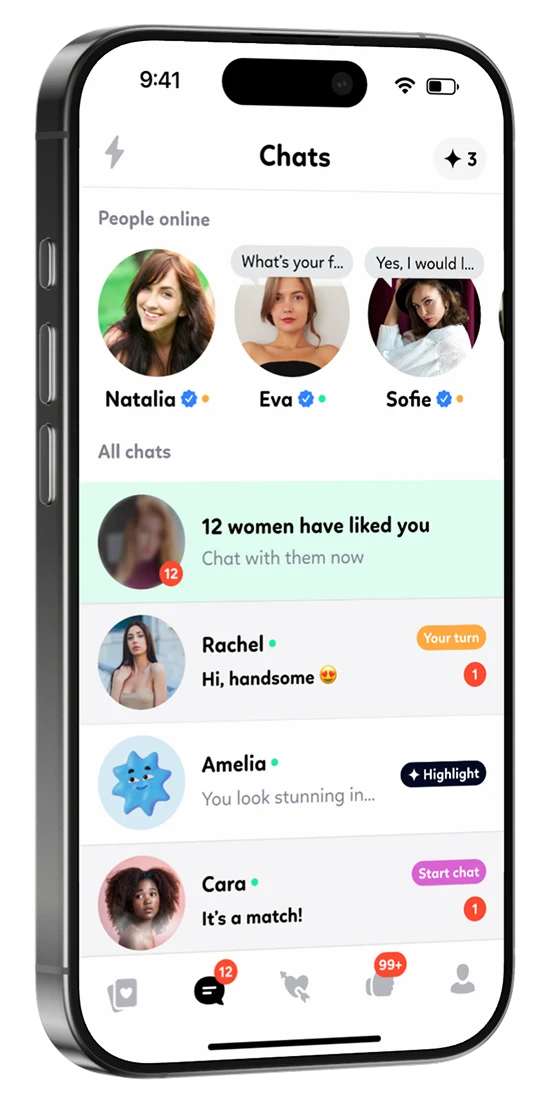
Kismia shifts some of that emotional work earlier. Relationship intentions are visible on profiles, which changes the tone of connection from the start. You’re not left guessing whether someone is casually browsing or genuinely open to building something.
Profiles that are filled out thoughtfully don’t just share preferences. They give context. They show how someone thinks about commitment, communication, and long-term connection. That context reduces ambiguity before feelings have a chance to tangle with uncertainty.
When two people meet with similar intentions already on the table, the “what are we” conversation often feels lighter — sometimes unnecessary. Research published in PubMed supports this idea: when partners share a mutual understanding of “who we are,” they tend to show higher commitment and relationship stability.
Kismia doesn’t promise certainty, but it offers relief from constant emotional guesswork.