



White Knight Syndrome: Meaning, Signs, and How to Stop Rescuing

It shows up as responsibility, long before you give it a name.
You remember their problems better than they do. You notice shifts in their mood before they say anything. You step in early — before things spiral, before they ask, before it gets “too much.” Caring feels active. Passive love feels risky.
This piece looks at white knight syndrome in relationships: how it forms, how it hides behind good intentions, and how it slowly changes attraction, intimacy, and balance. We’ll move through meaning, signs, psychology, and consequences without hype, without shame, and without turning it into a self-improvement speech.
What Is White Knight Syndrome? Meaning and Definition
White knight syndrome describes a relationship pattern where one partner consistently feels driven to save, fix, or protect the other. Not occasionally, not situationally — as a default way of loving.
If you’re searching what is white knight syndrome, the clearest explanation is this: your value in the relationship becomes linked to how useful you are. Care turns into responsibility. Responsibility turns into identity.
The white knight syndrome meaning often includes emotional over-responsibility, taking charge of someone else’s feelings, problems, or outcomes as if they were your own. According to Uncover Counseling, this pattern is closely tied to self-worth and fear of losing connection if you stop rescuing. Love starts to feel conditional on performance.
A workable white knight syndrome definition is simple: a dynamic where helping becomes compulsive, unbalanced, and necessary for closeness, rather than a choice made between two independent adults.
White Knight Syndrome vs. Healthy Support
Healthy support shows up as presence, not substitution. You listen without steering. You offer help after it’s asked for. You trust the other person to carry their own discomfort, mistakes, and recovery. Care here doesn’t require control.
In white knight syndrome, psychology shifts the focus. Attention moves from support to responsibility. You step in early, you soften the consequences, you make decisions on someone else’s behalf, often out of concern, not dominance. The intention is care; the effect is takeover.
PsychCentral’s distinction between empowering and enabling clarifies this line: support increases a person’s capacity to act independently, while rescuing gradually replaces that capacity by acting instead of them. When your involvement becomes necessary for emotional or practical stability, the relationship has crossed into imbalance.
The real difference shows up in outcome. Healthy support leaves both people standing. White knight syndrome leaves one person holding the structure, and the other leaning on it.
Signs and Symptoms of White Knight Syndrome
The white knight syndrome symptoms rarely announce themselves loudly. They blend into everyday habits.
Common patterns include:
- Feeling drawn to partners who are struggling or unstable
- Jumping into problem-solving during emotional moments
- Taking responsibility for fixing outcomes, not just offering support
- Letting your boundaries dissolve during their crises
- Feeling drained, then guilty for noticing the resentment
When people start wondering what's white knight syndrome, it often shows up as a subtle “I’ll handle it” energy in love. “Rescuers” frequently idealize their partner while minimizing their own needs, which creates dependence rather than partnership.
These white knight syndrome symptoms can look like devotion from the outside. Internally, they feel like a pressure that never fully turns off.
White Knight Syndrome Psychology: Why the Rescuer Role Develops
Most people don’t wake up wanting this role. The white knight syndrome usually forms earlier.
Many "rescuers" learned young that being capable kept things stable. Being helpful reduces conflict. Being needed secured closeness. This pattern often shows up in relationships with single parents, which is why dating as a single mom works best with a partner who offers genuine support, not a need to rescue.
If you’re asking again what is white knight syndrome, the deeper answer often includes fear of abandonment, a history of unbalanced relationships, or long stretches of loving people who needed saving more than they could offer reciprocity. Rescuing becomes familiar. Familiarity starts to feel like love.
How White Knight Syndrome Affects Attraction and Intimacy
Attraction changes when one person stops being a partner and starts being a stabilizer.
In white knight syndrome, one person quietly takes charge of the emotional climate. They decide when a conversation should happen, how upset is “too upset,” and which problems need immediate fixing. The other person adjusts to that rhythm, often without noticing it at first.
Intimacy thins in small, ordinary moments. A vulnerable confession gets redirected into advice. Frustration is met with reassurance instead of curiosity. Even affection starts to carry instruction: how to feel better, how to cope, how to move on. Desire struggles in that atmosphere, because being managed doesn’t feel chosen.
The clearest white knight syndrome symptoms appear when closeness loses its unpredictability. There’s less tension, less play, less space for two separate inner worlds to meet. What remains is safety without spark, care without charge. Over time, that shift makes intimacy feel quieter, flatter, and harder to revive. If that sounds familiar, it might be time to start fresh and find love in a dynamic built on equality, not rescue.
When Helping Becomes Control or Manipulation
What makes this pattern persuasive is how reasonable it feels at the beginning. The trap works because it’s efficient. And efficiency, over time, can crowd out equality.
Step 1 → Extra attentiveness
You notice things early. A mood shift. A missed deadline. A familiar pattern. Your awareness feels like care, and at this stage, it usually is. Moments of vulnerability tend to accelerate this process. When someone appears lost, overwhelmed, or emotionally exposed, the impulse to step in strengthens. Helping feels not just kind, but necessary.
Step 2 → Acting ahead of the moment
You begin stepping in before anything fully unfolds. You offer solutions before the problem lands. You adjust plans to prevent discomfort. Help arrives quickly, efficiently, and without friction.
Step 3 → Responsibility quietly shifts
This is where white knight syndrome explained becomes visible in behavior. Decisions start routing through you. Emotional balance depends on your involvement. You’re not asked, you’re expected.
Step 4 → Management replaces consent
Sliding away from empowerment toward enabling: support stops building capacity and starts replacing it. Responsibility settles with the person who feels most capable, not with the person whose life it is.
Step 5 → Stability hardens into pressure
From the outside, things look smooth. Problems resolve fast. Crises are rare. Inside the relationship, choice narrows. Your partner’s agency thins out. Your role expands. The relationship begins to organize itself around your judgment rather than shared direction.
White Knight Syndrome and Infidelity (How It Can Happen)
In white knight syndrome and infidelity, the risk rarely starts with desire. It starts with entitlement and blurred boundaries.
When someone invests heavily in saving, fixing, and stabilizing a partner, a sense of ownership can quietly form. The relationship begins to feel earned through effort. Loyalty is expected as part of that exchange. When that expectation is broken, the reaction is often intense—anger, shock, a feeling of deep personal violation.
At the same time, white knight syndrome can create conditions where emotional lines are already thin. If the rescuer feels unseen or reduced to a caretaker at home, outside attention may land differently. Being admired without responsibility, wanted without obligation, can feel like a return to self rather than a betrayal.
Infidelity grows out of imbalance. One person carries the structure of the relationship. Someone outside it offers relief from that weight. This doesn’t make infidelity inevitable. But it does explain why, in this pattern, trust can break in ways that feel sudden, even when the warning signs were quietly present.
How to Stop White Knight Syndrome: Practical Steps
Working with white knight syndrome symptoms begins in small moments of restraint.
- Pause the impulse
Notice the first pull to intervene. Let a few seconds pass. That initial urgency often comes from internal tension, not from what the situation actually requires. - Ask before acting
A simple “Do you want support or solutions?” interrupts the automatic rescuer role without withdrawing care. - Return responsibility
Let outcomes belong to the person who owns them, even when watching is uncomfortable. - Tolerate discomfort
Growth includes frustration. Learning to hold discomfort without fixing it is central to stepping out of over-responsibility patterns. - Build worth elsewhere
When your value comes from multiple places, not just being needed, help becomes a choice again.
If this pattern keeps repeating across relationships, outside support can help untangle it without turning it into blame.
If You’re Dating a White Knight: How to Respond Without Escalating
Being with someone who shows white knight syndrome traits can feel supportive at first. Over time, that same care can start to crowd your own space. The key is in responding in a way that doesn’t feed the dynamic.
Step 1 → Keep ownership visible
Handle what’s genuinely yours to handle. Pay your own bills. Manage your own conflicts. Let your actions quietly signal capability.
Step 2 → Decline over-help early
When support starts to feel like supervision, respond simply. Short phrases work best. You don’t need to justify competence you already have.
Step 3 → Separate care from control
Acknowledge concern without accepting takeover. Appreciation doesn’t require compliance.
PsychCentral’s guidance on detaching with care emphasizes staying emotionally present while stepping out of roles that reinforce dependency. You don’t have to withdraw to create balance.When responsibility stays clear, the rescuer role has less to organize itself around. Consistency does the work that confrontation never could.
How to Build a Balanced Relationship Without Rescuing
Mutual balance doesn’t appear because both people try harder. It appears when anxiety stops shaping the structure of the relationship. Many people fall into rescuing patterns because early dating is filled with mixed signals, uncertainty, and emotional inconsistency. Anxiety steps in where structure is missing.
Balanced love feels different in the body. Less monitoring. Fewer internal calculations. More room to let moments land without immediate correction.
This kind of balance, where both partners can need help, offer help, and also say no, forms more easily when a relationship starts with clarity rather than emotional gaps.
That’s where Kismia tends to matter in a practical way.
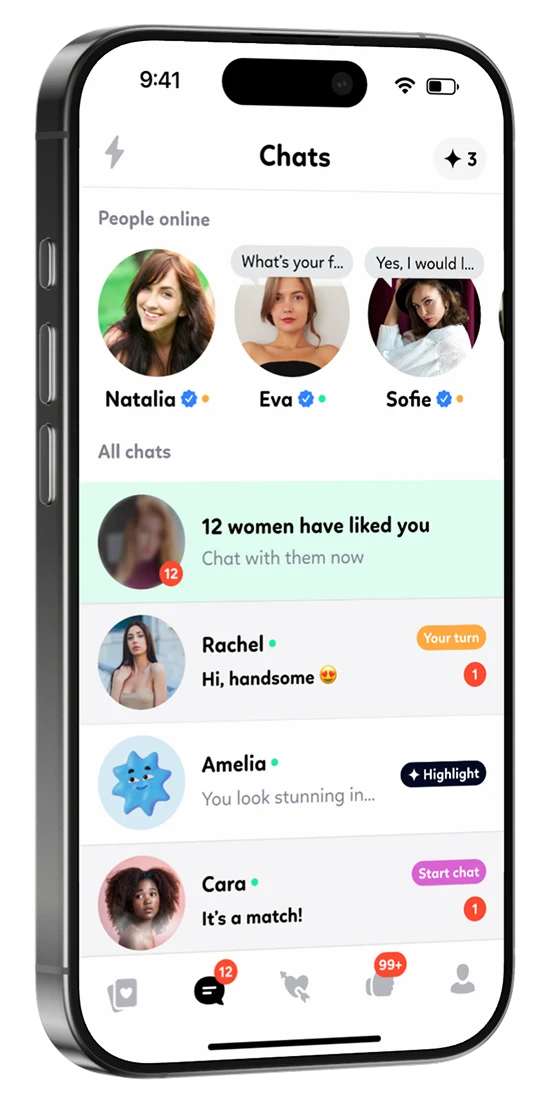
Kismia attracts people who are looking for steady, intentional relationships, not just emotional intensity. Verified profiles, clearer filters, and value-based matching reduce the pressure to prove worth through over-giving. When expectations are visible early, care doesn’t have to compensate for ambiguity.
In that environment, support stays optional rather than obligatory. Autonomy and closeness can coexist without one person carrying the emotional load for both. Mutual love grows from shared responsibility, not from rescue.