



How to Set Healthy Boundaries in a Relationship

There’s a moment in most relationships — early, or sometimes later — when you realize that good intentions aren’t enough. You can like someone deeply and still bump against each other’s limits. Boundaries in relationships aren’t walls; they’re the lines that let two people show up fully without erasing themselves in the process. They help you understand what feels respectful and what feels like overstepping, not through rules, but through mutual clarity.
In everyday life, “setting up boundaries in a relationship” might look like naming your rhythms, your needs, and what feels safe or uncomfortable. What matters most is the kind of presence you bring to each other — one that’s grounded, attentive, and aware of where comfort begins and ends. When both people can express what matters to them and be heard, the relationship feels more stable and more trustworthy.
Boundaries help shape how partners communicate and behave over time — and the very act of naming them together builds trust, not distance. That’s why thinking about how to set boundaries in a relationship is an important skill that couples develop as they grow.
Why Are Boundaries Important in a Relationship?
In a close relationship, it’s easy to overlook how connected you are, and then suddenly feel overwhelmed by small things — texts at night, how decisions are made, emotional reactions. Why are boundaries important in a relationship? Because they shape how you coexist without losing what makes you you. Boundaries are the quiet agreements about respect, space, and attention that help two people move forward without resentment building under the surface.
Some people imagine boundaries as rigid rules, but in healthy partnerships they’re shared understandings that protect emotional safety and encourage growth. When you articulate what feels respectful to you, how much alone time you need, what topics are tender for you, when you need support, your partner gets a clearer map of how to care for you without guessing or misreading signals.
That clarity becomes especially important when life gets busy or stressful. Without boundaries for a relationship that both people actually know and agree on, small misunderstandings can pile up and create distance. This is especially true for those looking to find love after a breakup, where clear boundaries from the start make all the difference.
Types of Boundaries in Relationships
Before you start naming lines and limits, it helps to see the bigger map of what those lines look like. Types of boundaries in relationships reflect the different ways people look after their comfort, identity, and sense of respect — from how they spend time to how they communicate or handle closeness. Every couple eventually learns that comfort with touch, communication, time, and space can vary wildly between partners, and naming those differences helps two people move forward with clarity rather than confusion.
At its core, boundaries in a relationship can include physical personal limits, emotional space, time and attention, financial expectations, and even how digital communication fits into your day. Some of these you’ll feel in your body (like how close is too close?), and others you’ll feel emotionally (like how much sharing feels safe). Understanding these types of boundaries in relationships gives you a vocabulary to work with when conversations get complicated.
Physical Boundaries in a Relationship
Physical limits are often the first things people think about when they hear the word “boundary,” because they’re easy to notice and easy to misunderstand. Physical boundaries in a relationship are about more than sex or affection; they’re about personal space, comfort with touch, and privacy. Some days you may want a hug, other days a partner’s presence beside you on the couch is enough.
Talking about how to set physical boundaries in a relationship means asking questions like: What kind of touch feels okay in public? At home? How do we handle alone time in shared spaces? These conversations are the groundwork for mutual care that feels safe rather than assumed. When you respect each other’s physical rhythms and preferences, the relationship feels easier and more grounded.
Emotional Boundaries in a Relationship
Emotions are the invisible threads between two people, and without clear limits they can pull too tight or fray too easily. Emotional boundaries in a relationship help you support your partner without taking on their feelings as your own, and help you be present without absorbing every emotional wave they experience.
These boundaries are about spacing your inner world so that you can feel your own emotions without losing yourself in someone else’s. They help you answer questions like: When do I need space to process my own thoughts before responding? How much emotional labor am I comfortable carrying? When you talk about emotional limits, you’re really talking about how you want to be cared for and how you want to care in return and that kind of clarity deepens connection rather than shrinking it.
List of Boundaries in Relationships: Examples
Here’s where the abstract gets real — boundaries in a relationship examples you can actually spot in daily life. These are just ideas of what boundaries should be set in a relationship to keep respect, comfort, and individuality alive.
- Agree that alone time is okay and not a sign of disinterest
- Decide together about how often to check in when apart
- Respect physical comfort levels — ask before initiating touch
- Be honest about your emotional needs without expecting your partner to “fix” you
- Choose how finances are handled, including individual and shared spending
- Set expectations for how friends and social time fit around the relationship
- Clarify how much access each partner has to each other’s devices
- Discuss how you handle family interactions and holiday plans
- Agree on how quickly you respond to texts when one of you is busy
- Decide what information is “off limits” for teasing or conflict
These examples of healthy boundaries in a relationship help both people know where they stand and what counts as respect in daily moments. The clearer you get on these points, the less you’ll guess, and the more you’ll actually communicate.
How to Set Boundaries in a Relationship Without Being Controlling
You don’t need a script to talk about what matters to you. Most people realize they need boundaries when something starts to feel off. When a comment lingers too long, when you keep saying yes to things you don’t enjoy, when resentment quietly builds. That’s usually the signal.
Setting up boundaries in a relationship is more like saying: "This is what helps me stay grounded when we're close." For women especially, starting on a safe dating site for women where boundaries are respected from day one makes that clarity a lot easier to establish.
Here’s a simple way to start:
- Notice your signals.
Tension in your body, reluctance to speak, repeating the same complaint in your head — these are usually the first signs a boundary is missing. - Name what you need.
“I need time to decompress after work.” “I’m not okay with sharing passwords.” That’s what how to set boundaries in a relationship often sounds like. Not perfect phrases, but honest ones. - Check in with your partner.
If it’s mutual, they’ll respond with curiosity, not defensiveness. Good boundaries work both ways — they help you learn what boundaries to set in a relationship so no one has to guess. - Stay flexible.
Boundaries shift over time. What felt fine last year might need adjustment now. That doesn’t mean something’s wrong, it means the relationship is still alive and changing.
The more naturally you treat these conversations, the less pressure they hold. How to set boundaries in a relationship without being controlling comes down to trust: in yourself, in your voice, and in your partner’s capacity to hear it.
Dating Relationship Boundaries: Friends and Exes
Every couple hits a few tricky spots and two of the biggest are old connections and close friendships. These aren’t problems by default, but they’re often where unsaid expectations live. That’s why being clear about dating relationship boundaries early on can save a lot of confusion later.
Dating relationship boundaries list often starts with:
- How much time is spent with friends?
- What kind of communication feels respectful when one of you isn’t there?
- Which past relationships are still active in some way and how?
These aren’t fun topics, but the calm way you talk about them says a lot about the foundation you’re building.
Boundaries for Opposite Gender Friendships While in a Relationship
Trust means being honest about what feels right for both of you. Boundaries for opposite gender friendships while in a relationship might include things like:
- Checking in before one-on-one hangouts, especially late
- Being transparent about conversations that might blur emotional lines
- Respecting when your partner feels left out or unsure without blaming
What’s okay in one couple might not work in another. The point is to find a rhythm that honors the connection without pretending jealousy or discomfort never happens. Good boundaries with friends when in a relationship protect your closeness without limiting your independence.
Boundaries With an Ex When in a New Relationship
This one tends to stir tension fast — not because someone’s doing something wrong, but because the context is emotionally loaded. Boundaries with an ex when in a new relationship should be as specific as possible.
- Are you still in contact? If so, how and why?
- Is your partner comfortable with that dynamic?
- Would you be okay if the roles were reversed?
When you're open about what kind of contact still exists, it helps your current relationship feel steady and prioritized. Clarity here makes it easier to build trust without all the silent guessing.
Unhealthy Boundaries in Relationships: When They Are Crossed
Not every limit is a healthy one. Some sound like care on the surface but actually hide control or neglect. Unhealthy boundaries in relationships might show up as:
- Demanding full access to your phone or social media
- Shutting down topics with “you’re too sensitive”
- Using guilt to control how much time you spend with others
When something keeps shrinking your space instead of helping you breathe — that’s when it’s time to pause. Understanding when boundaries are crossed in a relationship is about noticing patterns. Are you editing yourself constantly? Walking on eggshells? That kind of pressure slowly takes your voice out of the room. And it often builds until someone disconnects completely.
Healthy boundaries create clarity. Unhealthy ones cloud everything until even your needs start to feel like a threat.
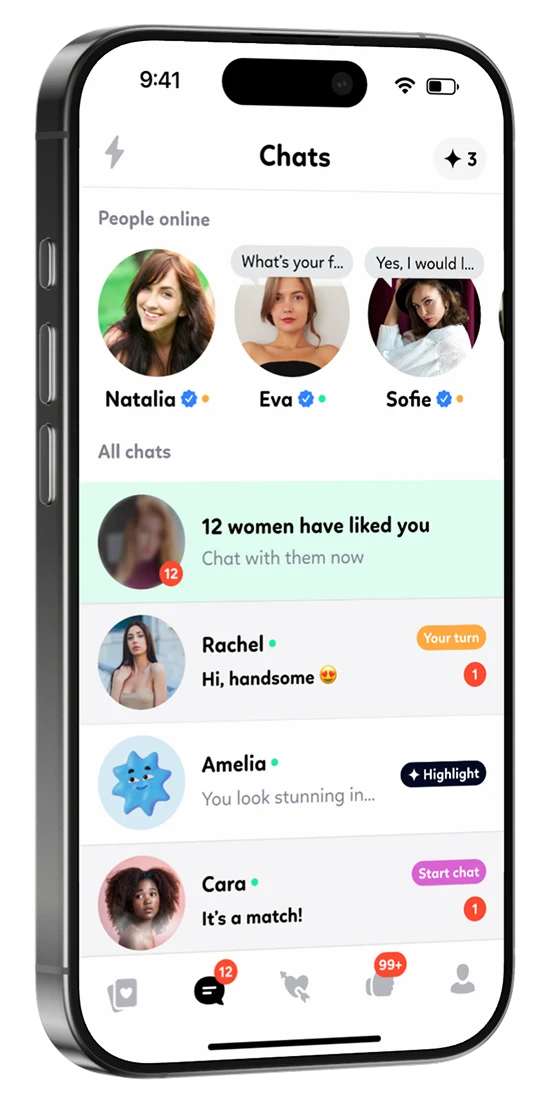
Find a Partner Who Respects Your Boundaries on Kismia
Some people make you feel like you have to earn the right to speak honestly. Others make it easy from the start. On Kismia, you meet the kind of people who don’t get defensive when you bring up what matters. Talking about boundaries in relationships feels less like a risk — more like a step toward something real.
Kismia gives you more than just matches, it gives you a way to meet people with shared values from the start. Verified profiles build trust. Smart filters let you choose what matters to you — long-term goals, lifestyle, even how open someone is to communication. And most importantly, the people here are intentional: not just looking, but ready to build something steady. Whether it’s early conversations or real-life plans, there’s space for honesty without judgment.
No mind games. No endless guesswork. Just real connection, shaped by real attention.
Start with someone who listens. Start with Kismia.