



Dating App Statistics: How Many People Use Them, Start Relationships, and Find Love
Ten years ago, meeting someone online still felt like a story you had to explain. “We met on an app” would trigger a smirk, maybe even an eyebrow raise. That smirk is gone, replaced by a nod of recognition.
Dating apps have slipped so seamlessly into our daily lives that swiping is now as casual as scrolling Instagram. Online dating is no longer the exception, it’s the norm. What started as a niche alternative for busy singles has become one of the most common ways people fall in love, start families, or, let’s be honest, go on a few weird first dates.
Online dating statistics worldwide show just how big this shift has been. Not only has the number of users exploded, but the nature of dating itself has changed. Romance has adapted to the digital age, and in the process, it’s become faster, more data-driven, and, surprisingly, more intentional.
This article isn’t just a numbers dump, though there are plenty of those coming. We’ll walk through the latest dating app statistics, look at who’s swiping the most, where love is actually blooming, and how platforms like Kismia are creating space for something a little more serious than the usual small talk and ghosting.
Online Dating Statistics: How Many People Are on Dating Apps Today?
For a long time, dating apps were considered plan B, the thing you did when real-life connections dried up. But somewhere along the line, they became the main plan.
How many people use dating apps? Roughly 364 million globally. That number’s climbing every year, and analysts expect it to pass 500 million before the end of the year. The most popular dating apps by number of users in 2025 include Tinder, Bumble, Badoo, and Kismia, each attracting millions monthly across different markets. If that sounds like a lot, it is. That’s what percent of people use dating apps in 2025, roughly 6.25% of the global population – those who are swiping, matching, and messaging.
The growth hasn’t been evenly spread, though. North America and Western Europe were early adopters, but in the last three years, most of the new users have come from Asia, Latin America, and Africa. Cheaper smartphones, faster internet, and fewer cultural taboos have made dating apps the go-to method of meeting someone in cities from Lagos to Jakarta.
How many people use dating apps in the US? Nearly 40% of adults have tried them. Among 18–29-year-olds, that figure shoots up to around 65%, meaning online dating is more of a rite of passage than a backup plan.
Age Group | App Usage % | Long-term Relationship Rate %
-----------------------------------------------------------------------------------------------
18–24 | ████████████ 76% | ████ 18%
25–29 | ██████████ 68% | ██████ 27%
30–34 | ████████ 54% | ██████████ 42%
35–39 | ██████ 46% | █████████████ 51%
40–45 | ████ 35% | ███████████ 47%
What’s more, users aren’t just signing up, they’re sticking around. While general apps are great, California dating sites serves a specific community. Many bounce between apps, some keep their profiles open while “talking to someone,” and a growing number pay for premium features. These statistics on dating apps show they’ve become cultural infrastructure. Just like social media replaced phone calls, dating apps are replacing the “so, how’d you two meet?” question with a shrug and: “Tinder. Or Bumble. Or Kismia.”
What Percentage of People Meet on Dating Apps?
Let’s get to the heart of it: are people actually meeting on dating apps, or are we all just endlessly swiping?
How many people meet on dating apps? In 2025, the number is rising year over year. In fact, depending on where you live and how old you are, dating apps might be the most common way couples get together. In the U.S., nearly one in five partnered adults under 30 met their current partner through an app. That number has been slowly but steadily rising every year.
Among newly married couples, the share is even higher. Some surveys suggest that over 60% of couples who tied the knot in 2024 first met online. If your goal is to find a partner for marriage, the odds have never been better, and the platforms are finally catching up.
But the story isn’t only about marriage. Online dating has also become a way to build short-term connections that sometimes turn into something more. People are making friends, experimenting with identity, or just learning how to communicate better in relationships. Dating app statistics by race also highlight disparities, for instance, Black women and Asian men often face lower match rates, even with similar profiles.
And here’s the thing: the line between “hook-up” app and “relationship” app is getting blurrier. While apps like Tinder still dominate in terms of volume, newer platforms (and even some of the veterans that have evolved) are leaning into deeper connections. More users are putting "looking for something serious" in their bios. More apps are designed around slowing things down. If you're ready to find more than swipes, that shift is already happening, you just need the right platform.
So when we ask what percentage of people use dating apps, the answer is simple: a lot. And increasingly, they’re not just meeting, they’re staying.
How Many People Find Love on Dating Apps?
There’s a quiet truth about dating apps most people don’t talk about: they work, but not always the way you’d expect.
While plenty of users still treat apps like an endless carousel of profiles, recent data shows that many do end up finding real relationships through them. A 2024 demographic survey found that around 34% of online daters had been in at least one relationship lasting longer than six months. On a related note, exploring Memphis dating app might lead to interesting connections. How many couples meet on dating apps? Recent data says more than 50% of newlyweds.
What’s changed over the years is the intent. While Tinder and others popularized quick interactions, the rising success of apps aimed at long-term dating suggests that people are becoming more direct about what they’re looking for. Profiles now include relationship goals as often as favorite TV shows.
But longevity is still hit-or-miss. Apps aren’t magic, they simply increase the odds of finding someone outside your existing circle. Whether that leads to something lasting depends on timing, chemistry, and no small amount of patience.
So, when we ask how many people find love on dating apps, the answer is: quite a few. Enough to treat it seriously. Enough to say that online dating is no longer the “alternative”, it’s part of the mainstream story.
Are There More Men or Women on Dating Apps?
Anyone who’s spent a few days swiping probably knows the answer: yes, there are more men, way more. And the numbers back it up. You don’t need to spend long on a dating app to notice it feels a bit unbalanced.
And that’s not just a feeling, dating app statistics gender show that, men still make up around 65 to 70% of users. It definitely changes how people interact: the whole vibe of the app shifts when there’s such a big gap.For men, especially those without pro photos or witty openers, it can feel like sending messages into the void. According to internal app data, around 20% of men receive over 70% of all female likes. That dynamic hasn’t shifted much in years.
Some platforms have tried to balance the field, giving women first-move power, limiting daily swipes, tweaking the algorithm. Still, the gap remains. What percentage of women use dating apps? Generally between 30 and 40%, with younger women joining more often, and leaving sooner, often due to message overload or just plain fatigue.
Dating app statistics men vs women highlight one thing clearly: a small group of men get most of the engagement, while many others struggle to get noticed. It’s not a great system, but it’s the one we’re still working with.
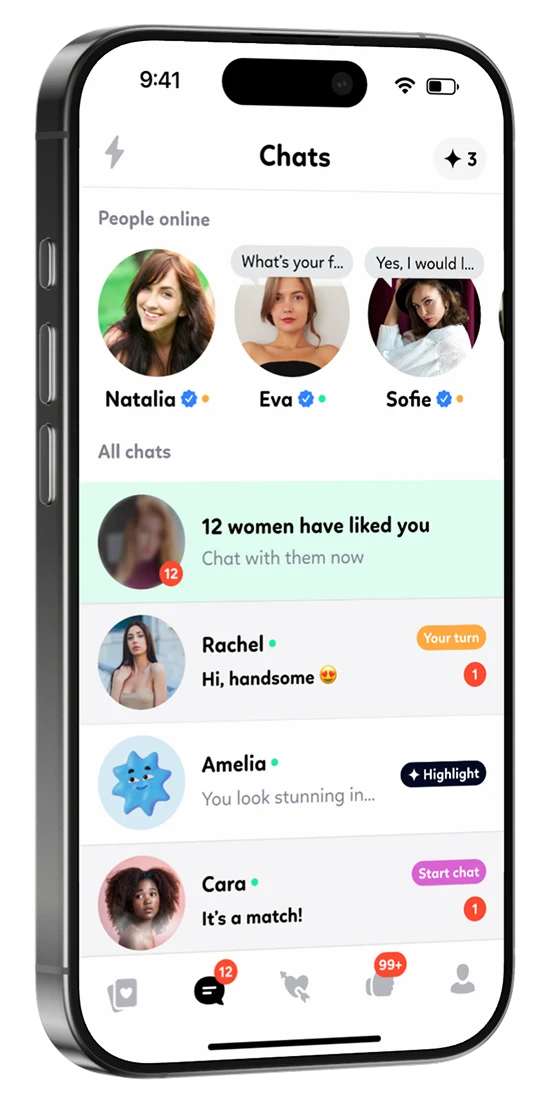
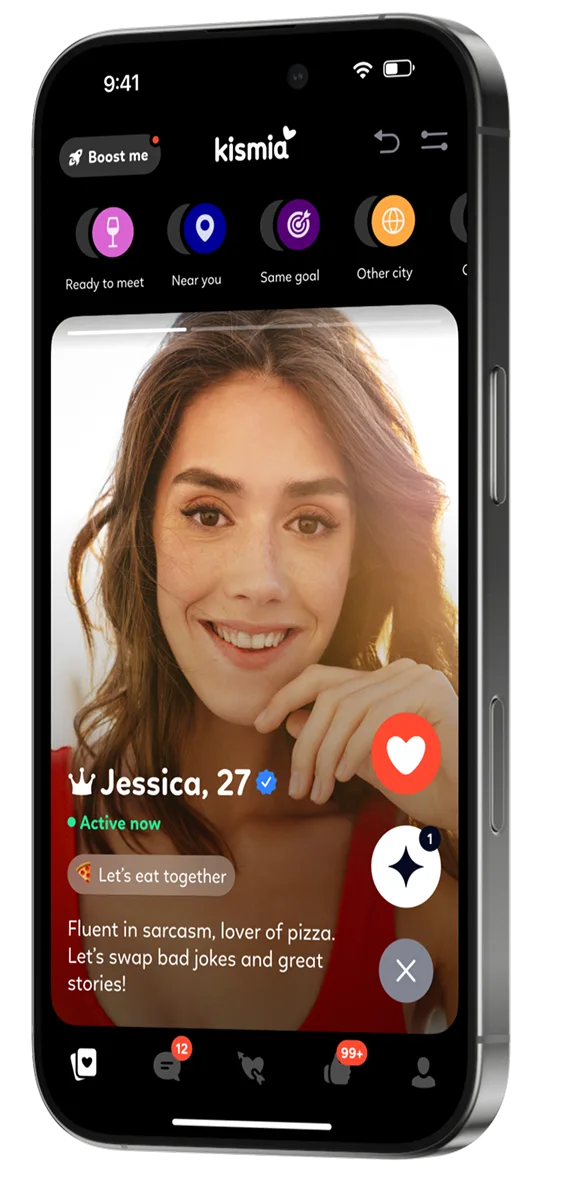
How Kismia Helps You Meet Someone Who’s Actually Serious
Most dating apps are built around the same idea: keep you scrolling. New faces every second, dopamine hits with every match, and then nothing. Another conversation fades, another date cancelled. Rinse and repeat.
Kismia works differently. It’s made for people who are actually ready to meet someone, not just collect matches.
Instead of throwing you into a sea of random profiles, Kismia starts by helping you figure out what you're looking for. Finding the right match is often easier when you use divorced dating. The app leans into clear intentions: users choose what kind of relationship they want, and profiles are checked for authenticity. You spend less time guessing and more time actually getting to know someone who wants the same thing.
There’s no pressure to be flashy or clever right away. It’s not about selling yourself in five photos, it’s about real conversations, and letting things grow from there.
So if you're over the casual back-and-forth and want something built on a bit more honesty, Kismia might be where you start your next real story.