



What to Say to Keep a Conversation Going Over Text: Prompts, Questions, and Examples

There’s a familiar moment when a conversation stalls.
The chat was fine. Maybe even good. Then it slows down to a single word. A “lol.” A “nice.” You stare at the screen longer than you want to admit, trying to figure out what comes next.
Learning how to keep a conversation going over text comes down to noticing how conversations actually move and what makes them lose thread. Most people don’t run out of things to say. They lose direction.
This guide walks through why texting fades even when the vibe is there, what to say to keep momentum, and how to continue a conversation without turning it into small talk or an interview.
Why Text Conversations Die (Even When the Vibe Is Good)
Even with interest there, the interaction can start to feel thin once the rhythm stops holding.
Common patterns show up again and again when people struggle with how to keep a conversation going over text:
- replies that close the door instead of opening it
- questions stacked back-to-back with no space to respond
- mismatched energy—one person expanding, the other shrinking
- no sense of where the conversation is headed
- long pauses that drain momentum
Verywell Mind notes that the exchange loses momentum when replies quietly shut things down instead of opening them up. If the platform you're using doesn't reward thoughtful messaging, it might be time to find a better app than Hinge, one where depth is built into the design from the start. That’s often when texting slips into something closer to a blitz-style Q&A — quick prompts, short replies, no space to linger. Not because anyone intends it, but because the structure stops inviting anything beyond the next checkbox response
How to Keep a Conversation Going Over Text: The Simple Formula
Good conversations tend to follow a quiet structure, even when they feel effortless.
A reliable way to think about what to say to keep a conversation going over text is this three-part flow:
Respond → Add → Invite
- Respond to what they actually said, not just the topic
- Add a small detail, reaction, or related thought
- Invite them back in with an open prompt
Chats fade when replies stop carrying weight. A response that only acknowledges (“yeah,” “same,” “wow”), technically keeps the chat alive, but it doesn’t give it anywhere to go.
That extra beat matters. A small reaction, a personal angle, a quiet opinion. When there’s something to respond to, the exchange starts moving on its own instead of needing to be pushed.
For example, instead of answering and stopping, you answer and leave a thread to pull on. This is how people who know how to carry a conversation keep things moving without forcing it. Conversations continue when both people feel there’s somewhere to go next.
Ways to Start a Conversation Over Text (That Don’t Feel Cringe)
The opening message sets the tone more than people realize.
Strong ways to start a conversation over text don’t rely on cleverness. They rely on relevance.
Openers that work tend to fall into a few natural categories:
- Profile-based: reacting to something specific they shared
- Shared interest: picking up on music, food, travel, or habits
- Situational: referencing timing, place, or a shared moment
- Playful: light humor without inside jokes
- Direct: simple, human, and unembellished
People respond best when they feel seen, not impressed. A grounded opener does that quietly, without needing a punchline.
Starting well doesn’t guarantee the conversation will flow, but it gives it a chance to.
What to Say Next: 30 Ready-to-Send Lines to Continue the Conversation
If you’re wondering how to continue a conversation after a brief response, lines that reopen the exchange usually do one of three things: add context, introduce curiosity, or shift the angle slightly.
Here are a few examples that naturally keep things moving:
- “That reminded me of something you mentioned earlier — how did that turn out?”
- “You said that a while ago, and I keep thinking about what happened next…”
- “This connects to something you told me before, but I never asked how it ended.”
- “What happened right after that?”
- “What part of that moment still sticks with you?”
- “That sounds like there’s a story behind it — how did it start?”
- “What was your first reaction when that happened?”
- “How did you feel about it at the time, not looking back now?”
- “What led up to that moment?”
- “Was that expected, or did it catch you off guard?”
- “How did the people around you react?”
- “Did that change how you look at things now?”
- “Would you do anything differently if it happened again?”
- “I’m curious what made you notice that in the first place.”
- “Is that something you enjoy, or did it just kind of happen?”
- “Was that a one-time thing, or pretty typical for you?”
- “What surprised you most about it?”
- “What did you take away from that experience, if anything?”
- “How long did it take you to process all of that?”
- “Do you still think about it sometimes, or did it pass quickly?”
- “What part of it was harder than you expected?”
- “What part was easier than you thought it would be?”
- “How would you explain that situation to someone who wasn’t there?”
- “What’s something people usually misunderstand about moments like that?”
- “Now I’m wondering how that fits into the rest of your story.”
- “That made me think of something — have you ever…”
- “Okay, now I’m curious. What got you into that?”
- “That’s fair. I had a totally different experience.”
- “Quick question—are you more into ___ or ___?”
- “That reminds me of a story I never told you.”
What matters most here is restraint. Continuing a conversation means creating enough space for the other person to step forward. When a follow-up feels open rather than demanding, the conversation continues naturally, without needing to be pushed or managed.
Questions That Keep Texting Flowing (Not Interrogation)
Questions keep conversations alive, but only when they feel like curiosity instead of data collection. People who know how to keep a conversation going don’t ask to fill space. They ask to open it.
The questions that work best invite reflection rather than precision:
- Preferences: “What kind of weekend actually feels restful to you?”
- Stories: “What’s a small memory you still think about for no clear reason?”
- Opinions: “What’s something people tend to overthink?”
- This-or-that: “Late nights or early mornings?”
- Hypotheticals: “If you could redo one low-stakes choice, would you?”
- Values-lite: “What usually makes you feel grounded?”
Psych Central has noted that questions tend to land better when they leave room for interpretation rather than pointing toward a “right” answer. That openness allows people to relax into their response, share a bit more freely, and sometimes wander into a story they hadn’t planned to tell. Staying grounded in your own tone while offering that space often creates the kind of ease where real connection and chemistry can start to form.
Funny Text Messages That Actually Get Replies
Humor in texting works best when it lowers the stakes. The most effective funny text messages create ease first. The response comes after.
Formats that tend to get responses:
- gentle exaggeration: “This might be a bold take, but…”
- mini-games: “Rate this idea from ‘questionable’ to ‘surprisingly solid.’”
- absurd hypotheticals: “Could you survive a week without music?”
- playful observations: “I feel like this conversation has ‘late-night snack energy.’”
Communication experts often point out that light humor works because it invites participation instead of approval. When there’s no pressure to be funny back, people relax—and reply.
Examples: How to Keep a Conversation Going Over Text in Real Chats
Real conversations don’t follow scripts. They move unevenly, pause without warning, and sometimes pick back up from unexpected places. The examples below illustrate how small, human adjustments keep things moving when the moment could easily slip away. Seeing what this looks like in context makes it easier to use.
First chat
Them: “Yeah, I like it.”
You: “What got you into it in the first place?”
After a date
Them: “I had a good time.”
You: “Same. That part about the story you told stuck with me.”
Rekindling after a pause
You: “Random thought—this reminded me of our last conversation.”
Dry texter
Them: “Nice.”
You: “Nice as in ‘pleasant’ or ‘surprisingly good’?”
Flirty but respectful
You: “This feels like one of those conversations that’s better in person.”
Each of these examples shows how to keep a conversation going over text by responding to what’s there and nudging it forward without forcing momentum. Communication research has noted that engagement grows when a message invites reaction rather than just delivers information. For example, a World Bank paper on humor and communication explains that humor works even in serious contexts because it lowers resistance and draws people into participation, turning passive reception into shared involvement and making space for responses that wouldn’t surface otherwise.
How to Avoid Boring Texting: Common Mistakes and Easy Fixes
Boring conversations rarely come from boring people. They come from habits that flatten interaction.
A few patterns to watch for if you’re trying to understand how to keep conversation going:
- one-word replies that don’t leave room to respond
- rapid-fire questions with no reactions in between
- constant negativity or self-deprecation
- over-explaining simple points
- panic double-texting when there’s a pause
Ease is often what keeps people coming back to the chat, not depth or intensity.
Small adjustments make a difference. React before you ask. Let silence breathe. Treat texting as a shared rhythm, not a performance.
According to Psychology Today texting loses energy fastest when it starts feeling heavy. Long explanations, serious tones, or emotionally loaded messages slow the exchange down. Conversations tend to last longer when they stay light enough to move back and forth easily, when replying doesn’t feel like a task.
How to Match Their Energy Without Losing Your Personality
Matching energy doesn’t mean mirroring every message. It means noticing pace, tone, and openness and responding in kind without shrinking yourself.
People who understand how to keep the conversation going tend to:
- keep replies proportional in length
- let playful moments stay light
- shift topics when something stalls
- lead gently when the other person is quieter
When the pace drops, some people lean in instinctively, others pause. In conversations with men, questions around how to keep a conversation going with a guy often surface when replies become sparse or stretched out. At that point, steadiness comes from noticing what’s present rather than trying to accelerate the exchange.
A similar tension appears in conversations with women. Thoughts about how to keep a conversation going with a girl tend to arise when engagement is there, but direction feels fragile. Leaving messages slightly open without steering too tightly usually helps the interaction stay easy.
Over time, ideas about how to keep conversations going shift away from technique. What starts to matter more is attention: how pauses feel, where the exchange naturally wants to turn, and when it needs a little space to hold on its own.
When to Move from Texting to a Date (So You Don’t Become Pen Pals)
Texting works best when it has somewhere to go.
At a certain point, messages stop adding new information. The jokes repeat. The rhythm stays pleasant, but flat. That’s usually the signal, not to push harder, but to shift formats.
Signs the moment is there tend to be subtle:
- replies come without effort
- curiosity runs both ways
- references start looping back on themselves
- the conversation feels steady, not exploratory
Knowing how to keep the conversation going sometimes means letting it change shape. Meeting in person gives the connection a different kind of clarity—tone, pace, presence, that texting can’t fully carry.
Simple transitions are enough:
- “This has been easy to talk through. Want to continue it over coffee?”
- “I’m enjoying this conversation. Would you like to meet this week?”
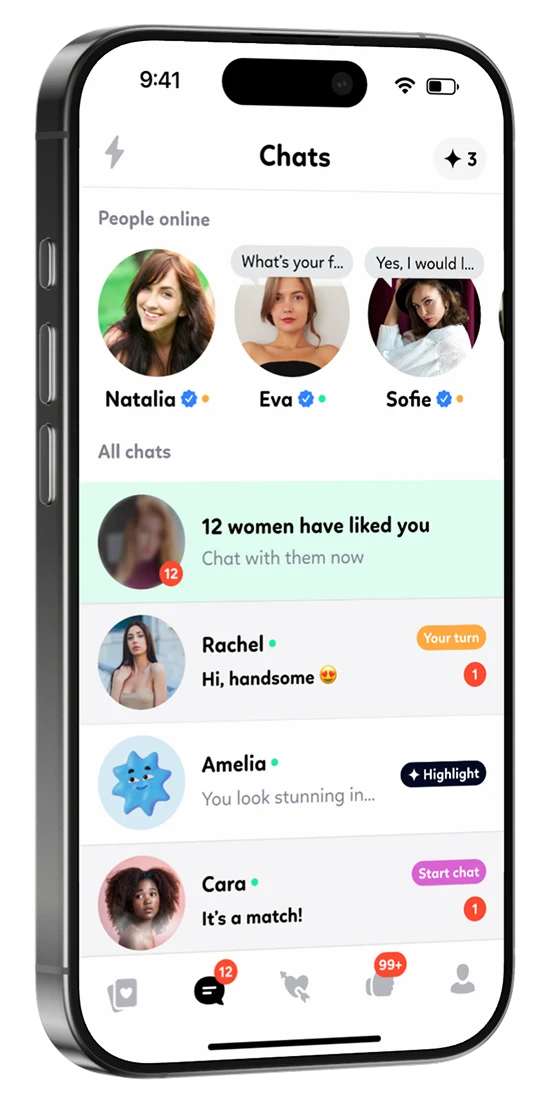
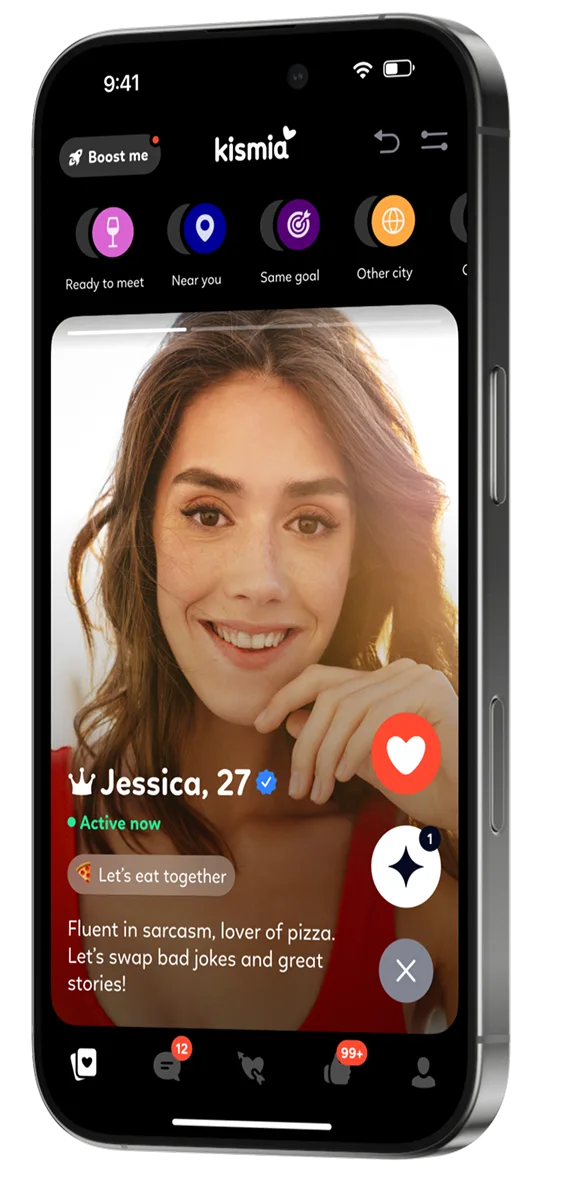
When conversations consistently move forward, it’s usually because both people want the same thing from them. That’s also why where you meet matters. On Kismia, people tend to show up with clearer intentions. Verified profiles and intentional matching reduce the guessing early on, which makes conversations feel more grounded and easier to take offline when the time feels right.
When interest is mutual and expectations align, the exchange stops needing constant attention and starts carrying itself forward.