




Wanting a partner who has built something is not a character flaw, whatever the internet says about it. People who work hard tend to look for the same thing in someone else, and financial stability is part of what makes a life together workable. The hard part is never the wanting. It is knowing whether any of what you are being told is true.
This page does not hand you a list of millionaires. It covers what usually goes wrong online, what a verified badge actually proves, and how search works on Kismia. No promises about numbers.
Why Everyone Tells You to Skip the Apps
Search for advice on how to meet rich men and the answer comes back the same way from every direction: try anywhere except a dating app. Charity boards, industry conferences, the good gym, a friend's wedding. The women handing out that advice are not wrong about what happened to them.
What usually breaks online is not mysterious. A profile takes ten minutes to write, so anyone can look like anyone. The people who reply fastest are rarely the ones worth replying to. Three weeks of pleasant messages end with no plan and no meeting, and that experience repeated a few times is enough to make anybody swear off the whole category.
Leaving the app does not fix it, though. The gap between what a man says about himself and what is true follows you to the charity board and the conference bar. It just takes longer to find there, because you have to spend the evening before you learn anything. Two or three of those evenings a month is realistically what most people manage.
Online has one genuine advantage, and it is narrower than the ads suggest. You read what someone claims before you spend the time, not after. That is not romance. It is usually a few weeks saved.

What "Verified" Actually Means
Premium platforms in this corner of the market sell income verification as the headline feature. That badge is the product. It is what the subscription is actually buying.
It is worth asking what such a check establishes. Usually that a document was uploaded once. Not that the figure is current, not that the income continues, and certainly not what the person intends with it. A payslip from two years ago and a payslip from last month look identical in a database.
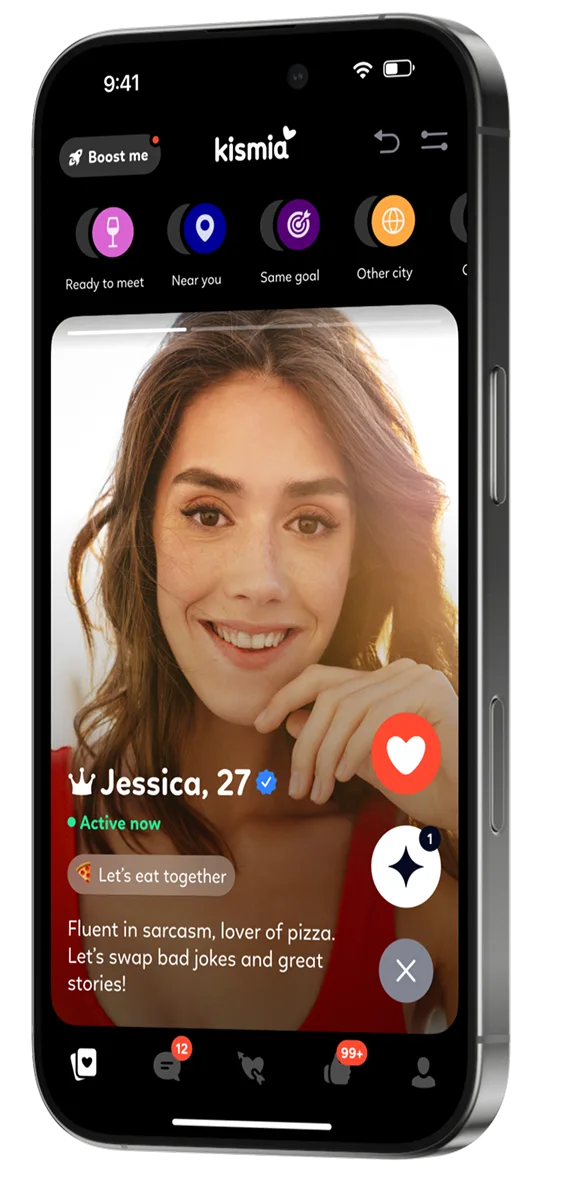
Kismia's position on this is plain. Photo verification here is optional, and the blue check next to a name means the photo belongs to the person in it. It says nothing about money, and we would rather say so than imply otherwise. The grey check turns blue when someone sends a selfie that is never published anywhere.
That leaves a more useful question. What a profile shows about how a man spends his days — what he studied, what he does, what he bothered to fill in — tends to tell you more than a number nobody can confirm.
How to Tell Who You're Actually Talking To
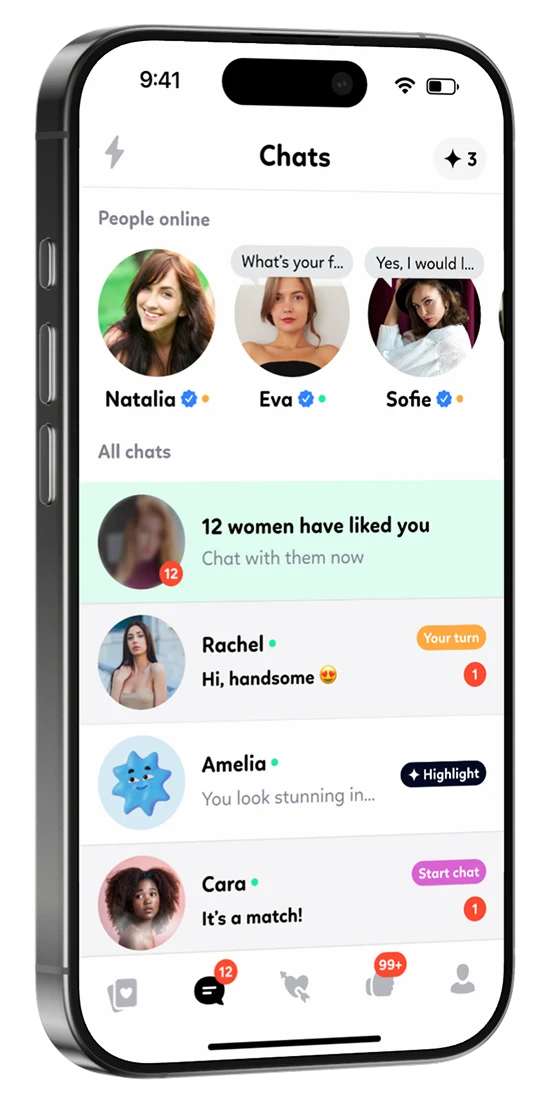
Some of the work belongs to the platform. Profiles are reviewed by a team, an antifraud system flags accounts that look wrong, and when an account looks suspicious Kismia asks for confirmation before it can carry on. Reporting and blocking happen from the profile itself, in two taps, and the Safety Center collects the patterns worth recognising before you need them.
The rest you read yourself, in the conversation. It is worth slowing down if he:
- asks for your number within the first few hours;
- suggests late-night meetings, parties or group settings;
- avoids the question of social accounts and shows none;
- contradicts something he said a week ago;
- asks you not to mention him to anyone;
- brings up money, investments or a transfer.
The last one needs no weighing at all. The Europol guide to romance scams repeats the same advice: go slowly, ask questions, tell someone close to you about anyone new. A request for money ends the conversation. It does not get explained.
The good signs are duller and therefore easy to miss. He suggests daytime, somewhere busy. He asks what you like to eat. He raises how you will get home before you do. He talks about what he intends to bring to a relationship rather than what he owns.
Two rules save weeks. The number goes out once a specific meeting is set, not before. And a plain "hey, how's your week" is politeness rather than a warning sign — sorting people by their opening line mostly filters out the normal ones.
Where to Look on Kismia
Knowing where you are looking generally beats being active on five platforms at once. Kismia splits the search into three places.
Discover is the card feed. Swipe right or tap the heart when someone stands out. Gender and age are set here for free, which is usually enough to see who is around.
Search has two tabs. All lists profiles; Nearby is part of Premium GOLD and shows who is close right now. The filter panel belongs to Premium: city, gender, age, online status, verification. Premium GOLD adds dating goals, height, mood and habits. City filters cover the whole country.
Activity holds four tabs: Matches for mutual interest, Visitors for who came by, Suitable for an algorithmic shortlist, and Likes, which shows who liked you and is part of Premium GOLD.
One detail matters more than it looks. Profiles have Education and Career fields, and the Suitable tab takes them into account when it builds suggestions. Filling yours in changes who you get shown to.
Then there is pace. Thirty to forty minutes a session is plenty. Two real conversations at a time beat ten started ones, because attention spreads thin and none of them reach a meeting.

A Profile That Gets Read
Your profile keeps working while you do something else. Kismia's completion scale splits its score across five blocks weighted 15, 25, 20, 20 and 20. What is missing shows up at a glance.
Three photos are enough, each with a job. The first shows your face, friendly and properly lit. The second lets someone see your build. The third is free. Past four the effect tends to reverse; under three something feels withheld.
Better left out: swimwear and lingerie, heavy filters, photos from several years ago, shots with children or an ex. The reason is the same in every case. Someone should recognise you on the day. An impression of your intentions forms well before the first written line.
The "About me" block gets skipped most often, which is a shame, because it is the only place you speak in your own words. Write what you do, what matters to you and above all where you would like to go — that last one is a ready-made opening for a first message, and people use it. If the blank field is the problem, the profile offers 16 prepared icebreaker questions.
Dating goals are worth setting too: long-term relationship, creating a family, conversation and friendship, or don't know yet. If you are here for serious relationships, say so at the start rather than three conversations in.
Skip the "don't message me if…" lists. They rarely deter the people they name, and they do put off the ones who saw no reason to argue.
Frequently Asked Questions
Where is the best place to meet rich men?
There is no single place, which is why those lists of venues keep getting rewritten. A charity gala filters for money but not for intentions. Working out which is which takes several evenings; online you read the claim first and decide about meeting afterwards.
Are there rich men dating sites that are actually free?
Registration, your profile, browsing, likes and the Visitors tab are free on Kismia. Platforms that charge for this niche are mostly selling income verification, and it is fair to ask what that badge proves before paying for it.
How can you tell if a man is genuinely well off online?
You cannot confirm anyone's income from a screen, and any platform claiming otherwise is overselling. What helps is the Education and Career fields, whether his story stays consistent over weeks, and how he goes about arranging a first meeting.
Is Kismia free to use?
Yes. Registration, your profile, browsing profiles, likes and the Visitors tab cost nothing. You can message any member with a green crown beside their photo first, and reply to anyone who writes to you. Premium lifts that limit; prices depend on your country and plan length and appear on the subscription page.
How do I know a profile is real?
A blue check marks an optional photo verification, done with a selfie that is never published. Profiles also pass through a review team, and an antifraud system flags accounts that look wrong. The rest shows up in conversation: haste, dodged questions and the subject of money are the clearest signals.
Is Kismia for serious relationships?
Yes. Most members are looking for a long-term relationship or a family. Others start with conversation and friendship, and the matching tools work either way.