



How to Stop Obsessing Over Someone: Break the Loop and Get Your Focus Back

Obsession rarely starts with a big moment. It slips in through small habits that feel reasonable at the time — checking your phone once more, rereading a message, replaying a conversation to “make sense of it.”
Then it becomes your background noise. You’re doing your day, but part of you stays somewhere else, waiting to feel settled again.
This article breaks down why it happens, what it looks like in real life, and what helps you step out of the loop without forcing yourself to go cold or pretend you don’t care.
Why We Obsess Over Someone (And Why It’s So Hard to Stop)
When you’re searching for how to stop obsessing over someone, the hardest part is that the obsession often feels logical. Your brain starts scanning for the one detail that would finally make the story feel settled. You replay tone, timing, and small changes in energy, trying to turn discomfort into an answer. The thinking feels productive, but it keeps the attachment active.
And when you get a small hit of relief — a reply, a like, a memory that makes you feel close again, it lands in your body. Even if it’s brief, it can be enough to keep the pattern alive.
Choosing Therapy explains this “obsession loop” in a grounded way, especially the part where emotional attachment and unresolved uncertainty make thoughts feel sticky and repetitive.
The frustrating part is that obsession doesn’t show up as “I’m spiraling.” It shows up as “I just need to understand.” And that thought can feel impossible to argue with.
Signs You’re Stuck in an Obsession Loop
If you’re looking up how to stop obsessing over someone you like, you may already recognize the pattern. It’s not just thinking about them, it’s losing focus because of them.
Some common signs:
- You check your phone automatically, even when you know nothing has changed.
- You reread old texts and scan for hidden meaning.
- You replay the last conversation and mentally rewrite it.
- You’re constantly checking their social media “just to see.”
- Your mood shifts depending on whether they show up.
- Your sleep gets lighter, or your mind starts looping at night.
It can feel like your attention no longer belongs to you. And the more uncertain things feel, the harder your brain grips.
Different Triggers, Different Fixes: What Situation Are You In?
Advice about how to stop obsessing over someone only helps when it matches the situation. Obsession has different roots depending on what happened and what still feels unresolved.
Take a breath and name the version you’re in:
- You might be searching for how to stop obsessing over someone you love, because the connection feels intense but unstable.
- If how to stop obsessing over someone who is ignoring you keeps looping in your mind, you can feel yourself slipping into “waiting mode”.
- If how to stop obsessing over someone who rejected you is constantly running through your head, it often comes down to one thing: the ending still doesn’t feel real yet.
- And how to stop obsessing over someone who hurt you can feel impossible when your emotions haven’t fully loosened their grip yet.
- Or you’re stuck on how to stop obsessing over someone who doesn't want you, and fantasy starts feeling easier than closure.
The next sections break these down one by one, so you don’t have to force the same solution onto a completely different trigger.
How to Stop Obsessing Over Someone Not Texting Back
If you’re dealing with how to stop obsessing over someone not texting back, the obsession usually feeds on one thing: time. Silence creates a vacuum. Your mind fills it fast. The quickest way to stop feeding the spiral is to stop checking for updates all day. Here are practical ways to do that:
- Set response-time boundaries for yourself
Pick a simple rule: check your phone two or three times a day, not every few minutes. Choose the times in advance. One check around midday, one in the evening. Your brain stops negotiating every ten minutes when it knows there’s a plan. - Reality-check the story you’re writing
Silence isn’t automatically a message. It’s often just… silence. Your mind will try to turn it into proof. Keep your feet on what you actually know. - Exit “waiting mode” on purpose
Plan something that takes your full attention: a workout, a work sprint, errands with music, cooking, meeting a friend. Don’t leave the day open for a text that may not come. - Look for reciprocity, not potential
Obsession clings to what someone might feel later. Shift your focus to patterns that exist now: consistency, effort, clarity. - Decide what you’ll do if they don’t reply
A plan calms the nervous system. Maybe you stop reaching out after a day. Maybe you step back after a repeated pattern. Your mind settles faster when it knows you won’t wait forever.
How to Stop Obsessing Over Someone Who Rejected You
Rejection has a way of turning into a mental negotiation. Even when you accept it on paper, your mind reaches back into the story like there’s something important you missed.
If you’re stuck on how to stop obsessing over someone who rejected you, it often means the ending still feels unfinished. Not in a loud way, more like a quiet irritation in the background, as if your brain refuses to set the file down.
Some people obsess over why, others obsess over how to change it. Either way, your mind returns to the same place because closure still feels incomplete.
Here’s what helps the loop loosen:
- Stop chasing the perfect explanation.
The cleanest reason is often the hardest: they didn’t choose the relationship. Your mind keeps searching for a deeper meaning because “they just didn’t want it” can feel too blunt to sit with. - Take “maybe later” seriously.
If they keep the door slightly open, it can leave you emotionally parked outside it. Treat uncertainty like information, not hope. - End the story somewhere real.
A quiet ending can still be an ending: a message you don’t send, a boundary you hold, a decision you make for yourself.
Psych Central has written about how repetitive thinking can be fueled by trying to “solve” emotional discomfort instead of letting it move through the system.
Rejection hurts. The obsession is often the mind's attempt to keep you close to what you lost, because distance makes it feel final. When you're ready to move forward, meet other divorced singles who understand that kind of emotional weight and are building something new from it.
How to Stop Obsessing Over Someone Who Hurt You
This one has its own kind of grip. When someone hurts you, obsession isn’t always longing. It can be anger that has nowhere to go. It can be disbelief. It can be the confusion of caring about a person who makes you feel small.
If you’re searching for how to stop obsessing over someone who hurt you, the first thing to know is that your mind may not be replaying the relationship because you “miss them.” It may be doing it because you’re trying to regain your footing.
What helps here is clarity, not closure fantasies.
Start with a “truth list”
Not a breakup manifesto, not a dramatic takedown. Just a grounded record of what actually happened, written plainly.
- What they said.
- What they did.
- How you felt afterward.
- What you tolerated that you wouldn’t accept again.
It’s hard to stop obsessing when your mind is still idealizing the person who caused damage. The truth list brings you back to reality.
Reduce contact and exposure
Even minimal contact can restart the loop — checking their stories, seeing their name, watching them act “fine.” Obsessive thoughts become harder to interrupt when the triggers stay active.
Let anger exist without turning it into a conversation
Reaching back out often feels like the fastest way to stop the pain. One more conversation, one more chance to explain themselves, one more moment of hoping it will finally land.
But the real relief shows up later, when you stop needing their reaction to feel certain about what happened. That’s when the obsession starts easing, because your mind no longer treats them as the only place where the story can feel resolved.
How to Stop Obsessing Over Someone You Love
This is the hardest version because love makes everything feel meaningful.
When people search how to stop obsessing over someone you love, they’re often dealing with a connection that feels real… but not stable. The affection is there, and so is the ache. You realize how much you care, but you can’t feel safe inside it.
The obsession usually doesn’t come from love itself. It comes from uncertainty wrapped around love mixed signals, inconsistent closeness, emotional unpredictability. Your mind stays on them because part of you is still trying to secure the bond.
A few shifts make a big difference:
Separate love from mental chasing
Love can be present without constant pursuit. Chasing usually shows up when the relationship isn’t giving enough steadiness to relax.
Stop measuring your worth by their attention
Obsession often turns into a daily scoreboard: did they text, did they initiate, did they miss you, did they show up.
That kind of tracking doesn’t deepen love. It drains it.
Reconnect with the part of you that existed before this
A small but powerful question helps here:
“What was I building in my life before they became the center of my focus?”
Love can stay. Your life just needs its space back, so it can hold love without shrinking around it.
How to Stop Obsessing Over Someone You Can’t Have
This is where obsession starts to feel almost romantic until you realize how heavy it gets.
If how to stop obsessing over someone you can't have is the thought you keep circling, it often involves a form of private bonding: fantasy conversations, imagined outcomes, “someday” thinking that stays more alive than real life.
It’s not always delusional. Sometimes the person is technically available, but not truly. They’re inconsistent, taken, or they want you close enough for attention, not close enough for a relationship.
Obsession thrives in scarcity. The less access you have, the more your mind fills in the blanks.
The shift here is gently brutal: fantasy feels good, but it doesn’t give you a life.
A grounded way out looks like this:
- Admit what’s real about the situation.
- Name what you keep hoping will change.
- Notice what the hope costs you: sleep, focus, confidence, time.
- Choose closure as a decision, not a feeling.
Choosing Therapy points out that obsessive thinking can stay hooked when your mind gets pulled back into an unfinished emotional story. You don’t have to shame yourself for the fantasy. You just have to stop letting it become your main emotional home.
What to Do Instead of Checking, Replaying, and Spiraling
Obsession creates a predictable urge: check something, replay something, reach for something.
The fastest way to break the loop is to replace the behavior without waiting until you “feel ready.”
Here’s a menu that works because it’s specific.
Quick replacements (2–5 minutes)
- Put your phone in another room and wash a few dishes.
- Open notes and write: “What am I assuming right now?”
- Step outside and take one lap around the block.
- Play one song that shifts your body out of freeze.
Medium resets (20–60 minutes)
- Go somewhere public: coffee shop, gym, bookstore.
- Do an errand that forces real-world focus.
- Call one friend and talk about anything else first.
- Clean one small space until it looks different.
Longer shifts (your nervous system will remember these)
- Join something weekly.
- Commit to a physical routine.
- Start a project that has nothing to do with dating.
- Build a life detail you’ll still care about a year from now.
Verywell Mind notes that redirecting attention works best when the replacement activity requires real engagement, not passive distraction.
Obsession weakens when your days become fuller, not busier, fuller. The kind of full where your attention returns to you.
When Obsession Is a Sign You Need More Support
Sometimes the simplest way to avoid the spiral is to stop dating in situations that create it. Consistency matters. Real interest matters. Clear effort matters. When someone shows up, you don’t have to guess so much.
If you’ve been reading about how to stop obsessing over someone, there’s a quiet truth underneath it: the obsession fades faster when the connection stops feeling like a question. When someone wants to be close, it shows. When they don’t, your mind ends up doing all the work for them.
This is also the point where it helps to widen your world again. The relationship isn’t the whole landscape, it’s one part of it. And when someone stays emotionally closed, it’s usually not a puzzle you’re meant to solve. It’s a sign to step back and choose the kind of connection that can actually meet you halfway.
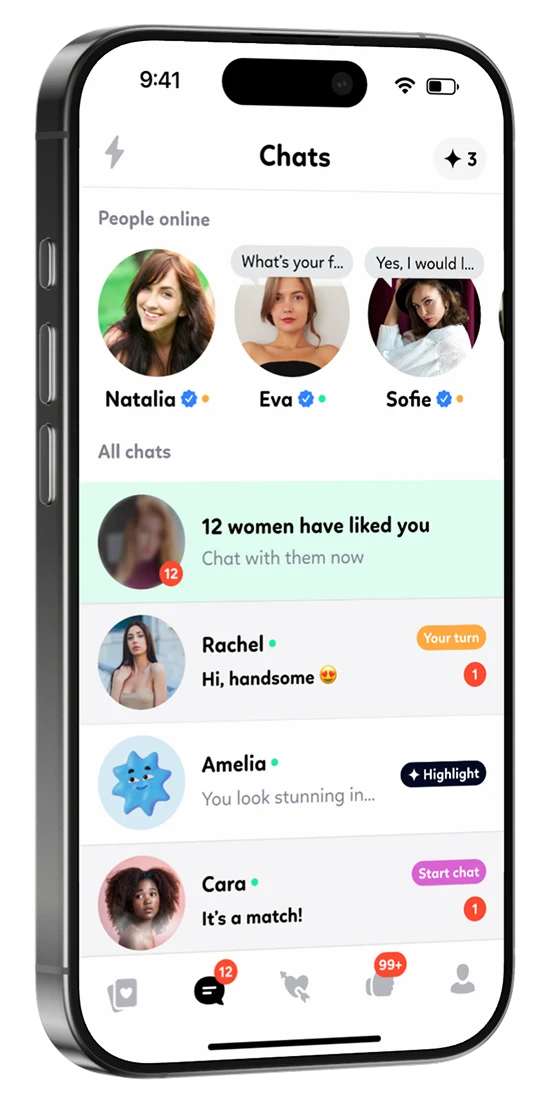
For some people, that shift starts simply: meeting more emotionally available matches instead of chasing the same pattern. Dating platforms like Kismia can make that easier. With verified profiles and filters, it’s more possible to screen for intention and compatibility early — and spend your time on people who are actually looking for something real.
If you’re trying to build something steady instead of mentally exhausting, Kismia can be a thoughtful place to start.