



What Is Unrequited Love? Signs, Why It Happens, and How to Move On

It doesn’t announce itself loudly. It slips in through routine. You notice how your mood depends on a reply. How your body tenses when their name appears and sinks when it doesn’t. You tell yourself it’s nothing serious, yet your thoughts keep circling back. The connection feels important, but strangely unfinished.
This piece looks closely at what is unrequited love when it’s happening in real life, not in dramatic gestures, but in daily imbalance. We’ll name it clearly, separate it from a crush or bad timing, and outline the early signs before they harden into habit. The aim is understanding first, relief second.
What Is Unrequited Love? Meaning and Definition
So, what is unrequited love in plain terms? It’s sustained emotional attachment without equal return. One person keeps reaching and adjusting, while the other may enjoy the attention but doesn’t meet that depth with consistent action. According to Wikipedia, unrequited love is defined as affection that is not returned in kind, where one person’s emotional investment isn’t matched by the other’s feelings or commitment.
When people ask what is the definition of unrequited love, they’re usually already feeling the imbalance. You’re investing time, attention, emotional energy. You remember details. You wait. Meanwhile, the other person stays vague or inconsistent, not unkind, just absent where it counts.
At its core, the relationship lives more vividly in your inner world than in shared reality. Contact exists, but it doesn’t move forward, and the gap between what you feel and what you receive becomes impossible to ignore.
Unrequited Love vs. a Crush or Mutual Love
It helps to sort the experience before judging yourself.
A crush is light and flexible. You enjoy the feeling, but your life stays intact. You don’t reorganize your sense of worth around someone’s attention. That’s not the dynamic described here.
“Right person, wrong time” involves mutual recognition. Both people acknowledge the connection, even if circumstances interfere. There’s disappointment, but not chronic doubt.
With what is unrequited love, the uncertainty stretches on. You keep reading into small gestures. You wait for clarity that never arrives. One person is emotionally present; the other stays just out of reach.
Signs and Symptoms of Unrequited Love
People searching “what is unrequited love?” are often already living the signs, even if they haven’t named them.
Common markers include:
- You initiate most conversations and plans
- Their interest appears in bursts, then fades
- You replay interactions afterward, looking for reassurance
- Emotional closeness feels one-sided
- Your mood lifts sharply after contact, then drops
- Waiting becomes part of your routine
Another sign of what is unrequited love is mental occupation. You’re present elsewhere, but part of you stays alert to them - their availability, tone, timing. The connection isn’t growing, yet it keeps taking up space.
Why Unrequited Love Happens: Common Psychological Reasons
Knowing what is the meaning of unrequited love rarely prevents it - most people recognize the pattern only after they’re already involved.
What helps more is seeing how it quietly starts.
Psychology overviews like this one from EBSCO describe unrequited love as a growing imbalance between emotional investment and response - not caused by one clear rejection, but by staying emotionally extended without real feedback.
It often begins with interpretation. Someone replies late but warmly, remembers a detail, shows interest once - and the mind fills in the rest. You start responding not to what’s happening, but to what it could mean.
Unavailable people play a role too. When someone can’t fully show up, there’s room to imagine the best version of them.
Why Unrequited Love Feels So Intense
The intensity catches people off guard. They wonder why something so fragile feels so consuming.
Part of the phenomenon of unrequited love lies in unpredictability. Small signs of interest arrive irregularly. Each one lands hard because it’s rare. Your nervous system learns to stay alert, scanning for the next signal.
If you’ve asked yourself "what is unrequited love?” and felt embarrassed by the depth of your reaction, this explains it. Letting go isn’t just emotional. It’s physical. Your body has adapted to waiting.
This is why distance can feel like withdrawal and why understanding the mechanism is the first step toward loosening its grip, without forcing yourself to be “over it” before you’re ready.
Common Types of Unrequited Love
- The friend zone
You’re close. You talk often. You’re trusted with feelings and stories. But romantic interest never moves past a soft, consistent no. The connection is real, it just isn’t moving in the same direction. - The situationship
There’s flirting, intimacy, shared routines. Enough closeness to stay attached. Not enough clarity to feel secure. Conversations circle around feelings, but decisions never land. - The ex you can’t let go of
Maybe you still talk. Maybe you just replay memories. Either way, your emotions are tied to a version of the relationship that no longer exists, while real life keeps moving without it. - The emotionally unavailable partner
They’re kind, interesting, sometimes even affectionate, but closed off where it counts. You keep adjusting to their limits, hoping availability will grow with time. - The proximity crush
A coworker, classmate, or someone you see regularly. Feelings build quietly through routine contact, while boundaries remain unspoken and nothing ever quite crosses the line.
Relationship writers often group these patterns by access and ambiguity rather than intensity. A recent Forbes overview described them as different relational traps - some more painful precisely because they offer just enough closeness to keep hope alive without resolution.
Emotional and Mental Effects of Unrequited Love
Living with unrequited love changes your inner rhythm, even if everything looks normal from the outside.
- Your mental energy leaks quietly
You replay conversations while brushing your teeth. You imagine different endings during meetings. Nothing dramatic, just a steady drain that makes focus harder than it used to be. - Your mood becomes reactive
A warm conversation lifts you for hours. Silence drops you just as fast. You start gauging how you feel about yourself based on someone else’s attention. - Self-trust thins out
Instead of listening to your own discomfort, you explain it away. You tell yourself you’re overthinking. Over time, your inner signals stop feeling reliable. - Your social world subtly shrinks
You say you’re not interested in dating. In reality, you’re already emotionally occupied. New connections don’t get a fair chance. - Tension becomes your baseline
There’s no clear rejection, but no relief either. The low-level waiting, hoping, checking becomes so familiar that it starts to feel normal.
Should You Confess Your Feelings? How to Decide
This is where many people stall. Saying nothing hurts. Saying something feels risky.
Before you decide to speak up, it helps to pause and ask yourself a few grounded questions - not to push the outcome, but to understand what you’re really hoping for.
- If nothing changes after you say it, would you feel relief or deeper exposure?
This question alone often clarifies whether the urge to confess comes from a desire for mutual connection or simply from wanting the tension to stop. - Is there evidence - not hope - that your feelings could be returned?
Look at actions, not potential. Have they shown consistent interest, or mostly comfort with things staying undefined? - What is the cost of staying in ambiguity?
For some people, clarity brings relief even when the answer is no. For others, the fear of hearing it out loud keeps them stuck longer than necessary.
If you do decide to share how you feel, keep it simple. Confession is a way to stay honest with yourself - to name what you feel and let the situation show you what it can and can’t become.
How to Move On From Unrequited Love: Practical Steps That Work
- Name the reality
Write down what actually exists between you, not what could exist. Keep it factual. - Reduce exposure
Limit contact where possible. Not as punishment, as relief for your nervous system. - Remove emotional triggers
Mute, archive, step back from places where you keep reopening the wound. - Create a truth list
When idealization kicks in, return to concrete behaviors, not imagined potential. - Rebuild routine
Fill time with things that engage your body and attention - movement, structure, presence. - Let new connections in
Meeting people who show steady interest helps reset what feels normal.
Each step loosens a different part of the hold. Together, they create momentum.
If You Still Have to See Them (Work, Friends, Social Circles)
Sometimes distance isn’t fully possible. You share a workplace. A friend group. A community.
In these cases, unrequited love requires boundaries rather than disappearance.
Shift interactions into group settings. Reduce one-on-one time. Keep conversations neutral and time-limited.
Internally, practice separation. Notice when your attention drifts toward monitoring them - their mood, their reactions, their availability and gently bring it back to yourself.
Living alongside what is unrequited love without feeding it is a skill. Awkward at first. Easier with repetition.
How to Rebuild Self-Worth After One-Sided Love
Rebuilding self-worth after one-sided love isn’t about affirmations or “loving yourself harder.” It’s about stopping the quiet habits that keep draining you and deliberately shifting your focus back to your own life.
Here’s what that looks like in practice:
- Stop feeding false hope
Pay attention to the small explanations you make for them. Silence becomes “they’re busy.” Distance turns into “they’re just unsure.” Indifference starts to feel like mixed signals. Each reinterpretation keeps you emotionally involved longer than the situation actually deserves. - Create real distance, not symbolic distance
This means fewer messages, fewer check-ins, less scrolling through their social media. Not as punishment, but as a way to stop reopening the same wound. Emotional space doesn’t appear on its own - it has to be protected. - Refill the empty space on purpose
One-sided love often takes over because other areas feel thin. Work, learning, movement, creative projects, the body - this is how your nervous system remembers that life is bigger than one attachment. - Shift from proving to choosing
Pay attention to moments where you’re trying to earn interest instead of asking yourself whether this dynamic actually works for you. Self-worth grows when your standards matter more than someone else’s approval. - Take responsibility without self-blame
You don’t need to fault the other person, and you don’t need to shame yourself. Simply recognize where you stayed invested longer than it served you - and decide differently next time.
This is what rebuilding looks like: fewer fantasies, more structure. Less waiting, more direction. Not closing your heart, just giving it a steadier place to land.
When to Get Support (Therapy, Coaching, Trusted People)
Some experiences fade on their own. Others linger longer than expected. If you find yourself repeatedly asking what unrequited love means across different relationships, outside support can help you step back and see the pattern, not just the person.
That support doesn’t have to be dramatic or permanent. Sometimes it’s therapy. Sometimes it’s coaching. Sometimes it’s one honest conversation with someone who isn’t invested in keeping your hope alive. Mental health writers at Calm describe unrequited love as especially draining because it keeps the nervous system in a state of anticipation instead of resolution - always waiting, rarely settling.
And still, this isn’t the end of the story.
Life doesn’t narrow down to one person who couldn’t meet you. There are relationships where interest doesn’t need to be decoded, where care is visible early on, where you don’t have to wonder whether you matter. Mutual love exists - quieter, steadier, far less confusing.
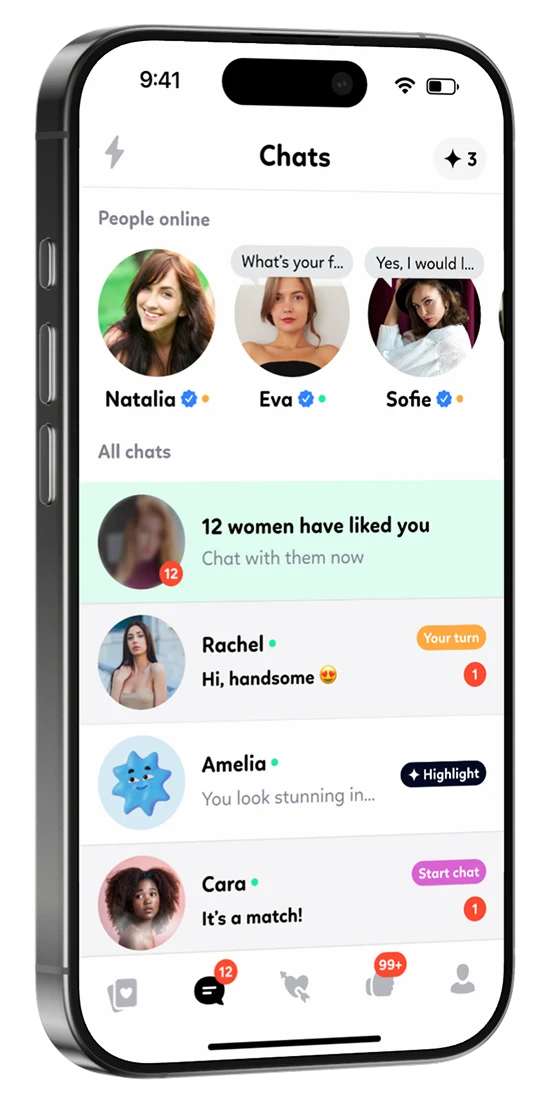
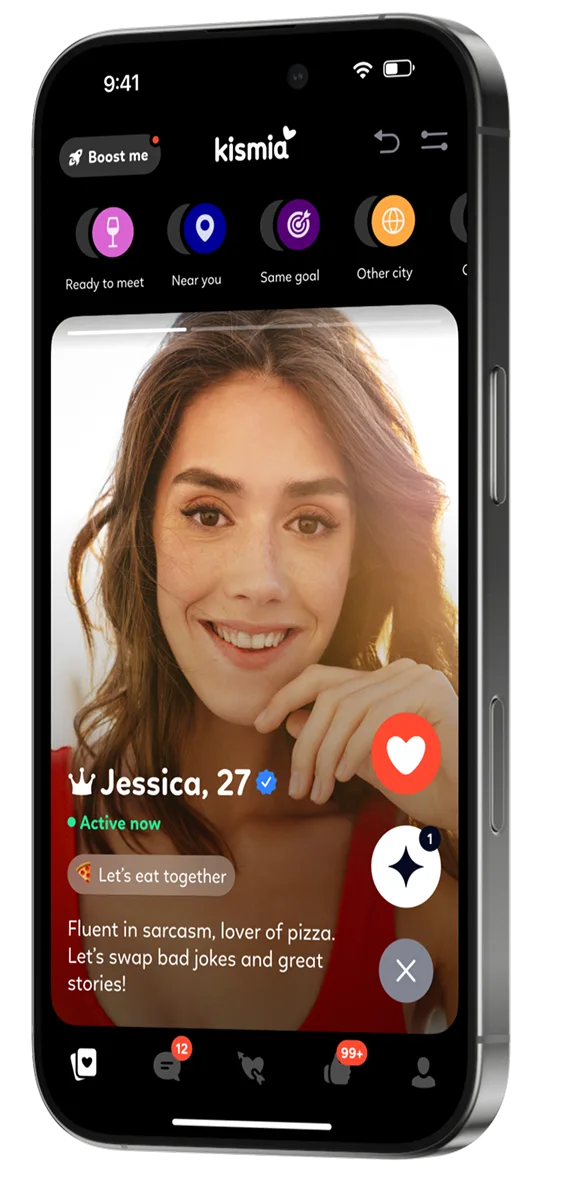
For some people, dating platforms become part of that next chapter. Especially spaces built for intentional connections. On Kismia, profiles are verified, filters are clear, and interest tends to show itself early - sometimes within the first few messages. Less ambiguity. More emotional transparency.
You deserve to be met with the same energy you give. To be chosen without having to chase. If you’re ready to look toward something mutual, Kismia can be a gentle place to start.