



How to Spot a Narcissist: 15 Signs You’re Dealing With One

Not every selfish or confusing partner is a narcissist, but some are. And once you learn to recognise the narcissism symptoms, it becomes easier to step away before things get tangled.
That’s what narcissist traits in a relationship often look like — clear in the beginning, blurred by the end.
If you’ve ever wondered “what’s a narcissist man?” or caught yourself thinking “am I dating a narcissist?”, this guide will help you learn how to spot a narcissist in a relationship, recognise early red flags, and understand what healthy balance truly feels like.
Narcissist Meaning in a Relationship
Being with a narcissist doesn’t always feel toxic right away. At first, they seem focused, self-assured, even romantic. But with time things change.
The real narcissistic meaning in a relationship lies in the emotional imbalance that builds over time — one person’s world becomes the center of everything. Their needs define the rhythm, their moods shape the atmosphere, and validation becomes the currency of peace.
The story unfolds quietly. Good moments still appear and keep you hoping. If you're ready to leave that cycle behind and find women worth your time, knowing these patterns is the first step. Yet narcissistic behavior in a relationship often forms a repeating pattern, one where your voice fades, your boundaries soften, and your energy is spent maintaining their comfort.
Narcissistic Traits vs Narcissistic Personality Disorder
It’s easy to notice symptoms of a narcissist — self-focus, arrogance, or a craving for attention. But not everyone showing these traits has narcissistic personality disorder. In small doses, confidence or ambition can look similar from the outside.
If you’ve ever caught yourself wondering “is my partner a narcissist?”, remember that a few difficult traits don’t always mean a disorder. According to the Mayo Clinic, narcissistic personality disorder relationships are marked by consistent grandiosity, a lack of empathy, and an excessive need for admiration — behaviours that interfere with daily functioning and emotional safety. Roughly 0.5% of adults meet the diagnostic criteria, and around 75% of those diagnosed are men, which is why discussions often centre on male narcissistic personality disorder symptoms.
Many people show narcissist symptoms temporarily — during conflict, insecurity, or stress, but can still reflect, apologise, and grow. What distinguishes NPD from ordinary self-focused behaviour is persistence over time and resistance to feedback or change.
If you’re trying to understand the difference, keep in mind: only a qualified mental health professional can define or diagnose NPD. Your focus should be on recognising how someone’s behaviour affects your wellbeing and what boundaries help you stay grounded and safe.
Early Signs When Dating
Not all red flags wave right away. Some show up as charm, connection, or “instant chemistry.” If you're wondering how to spot a narcissist (man or woman), keep in mind: when early behavior feels too intense, too fast, or too perfect, it may be a need for validation disguised as intimacy.
Love-bombing and Fast Intimacy
One of the most telling early signs of a narcissist is how quickly the story unfolds. You’ve just met, and already there are long texts, deep confessions, talk about the future. You’re the one, the only, the person they’ve been waiting for.
It’s exciting until it starts to feel like you’re being swept instead of seen. This is where narcissist behaviour in a relationship often begins: the rush to secure your attention before trust has had time to grow. At first, the intensity feels intoxicating. Later, it can feel like pressure, a rhythm set by someone else. Real intimacy moves at a human pace. If it feels like a race, slow down. The right person will give you the space to build a real relationship without rushing the trust.
Mirroring and Idealising
They like what you like. Believe what you believe. It feels like fate — someone who finally understands you. What feels like a deep connection can sometimes be an echo.
Narcissistic men in relationships reflects your words, your moods, even your dreams — until the harmony slips. The moment you show difference, the warmth cools, and you realise you were seeing yourself, not them.
Early signs aren’t always loud. Sometimes, they just feel too perfect to be real.
15 Signs You’re Dealing With a Narcissist
If you’ve ever wondered what are the signs of a narcissist, this section breaks them down clearly — not just behaviours, but how they make you feel. You don’t need all fifteen to be sure, often just a few recurring ones are enough to indicate you’re dealing with narcissistic behaviour in a relationship.
1. Lack of Empathy
They listen, but nothing sticks. You share how something made you feel, and they change the subject or flip it back to themselves. Over time, you stop opening up, not because you don’t care, but because they clearly don’t.
This absence of emotional depth is one of the most consistent signs of a narcissist in relationship. You’re expected to care about their world, but yours is optional.
2. Grandiosity and Superiority
Admiration isn’t enough — they expect it. Every story circles back to them: their job, their talents, their brilliance.
That quiet sense of being “above” others is one of the most visible narcissist signs. The world is a stage, and they never leave the spotlight.
On a related note, exploring California Dating site might lead to interesting connections.
3. Entitlement
You compromise; they assume. Plans, moods, and priorities revolve around their needs. When things don’t go their way, blame appears instead of dialogue.
This sense of “the rules don’t apply to me” is a core narcissistic trait — subtle, but exhausting over time.
4. Control and Rules
At first, it sounds like care: “I’m just worried about you.” Then it turns into limits — where you go, who you talk to, how you spend your time. This is what blurs love with control. You begin to shrink, just to keep the peace.
5. Gaslighting
They twist facts until you doubt your memory. “That never happened.” “You’re too sensitive.” “You misunderstood.”
Gaslighting is one of the clearest signs of a narcissist in a relationship — reality becomes negotiable, and you start trusting their version more than your own.
6. Blame-shifting
No matter what happens, it’s your fault. You’re “too emotional,” “too demanding,” “too much.”
This pattern is the simplest revealing example of narcissistic behavior in a relationship — a refusal to take responsibility, wrapped in logic.
7. Intermittent Reinforcement
Warm one day, distant the next. You never know which version will show up.
This unpredictability keeps you chasing the moments when things felt good — one of the most confusing signs of a narcissist when dating. It’s not love; it’s control through uncertainty.
8. Jealousy and Triangulation
They keep you slightly off balance — mentioning an ex, flirting just enough to sting. When you react, you’re “too jealous” or “paranoid.” Comparison is their quiet weapon — a way to make you compete for the connection that should already be yours.
9. Boundary Violations
You say no, they push again. You ask for space, they find a reason to appear.
A lack of respect for limits is a constant sign of a narcissist in a relationship — boundaries feel optional to them, and exhausting to you.
10. Image Management
One of the typical signs of a narcissist boyfriend (of girlfriend) is that social image matters more to them than honesty. They care about being admired, not about being kind. What people see and what you live rarely match.
11. Exploitation
Your empathy becomes currency — they take freely, give little.
It’s one of the quieter narcissistic traits: using love, time, or energy as resources to serve their comfort.
12. Rage or Silent Treatment
Challenge them, and the warmth disappears — replaced by anger or silence.
This emotional punishment is typical narcissist behaviour in a relationship: control through withdrawal or intimidation.
13. Envy and Resentment
Your happiness unsettles them. The moment you shine, their warmth fades. They don’t celebrate, they retreat or criticize. This discomfort with your success is a sign of narcissism, they can’t stand a spotlight that isn’t theirs.
14. Smear Campaigns
Disagree, and the story changes. Suddenly you’re the one who’s “unstable” or “cruel.” Behind the scenes, they gather sympathy, not truth. This rewriting of reality is a classic sign of a narcissist — protection of image at the cost of your reputation.
15. Hoovering After Distance
After silence or a breakup, they reappear — kind, apologetic, nostalgic.
But this isn’t healing; it’s one more loop of narcissistic behaviour in a relationships. The goal isn’t reconnection, it’s control.
How Narcissists Treat Their Partners Over Time
We already know how it begins — it starts perfectly, almost dreamlike. But how do narcissists act as time goes on? Subtle shifts in behaviour create an atmosphere of uncertainty, leaving you questioning your own perceptions and choices.
The warmth that once felt natural becomes calculated; charm turns conditional; and small criticisms begin to slip in.
Recognising these narcissist symptoms is the first step to understanding the pattern most narcissistic relationships follow: moments of idealisation, sudden devaluation, abrupt discard, and sometimes hoovering. Each stage carries emotional and practical impacts, gradually eroding confidence and reshaping daily life.
This cycle sets the stage for what comes next: the swings between idealising and devaluing, and the painful back-and-forth of discard and hoover.
Idealise and Devalue
First, they build you up. You’re amazing. They’ve never met anyone like you. They mirror your values, future plans, dreams.
But the moment you ask for something real — space, clarity, accountability the warmth turns cold. The compliments stop. Criticism begins. You’re “too much.” “Not like you used to be.”
This shift is one of the clearest signs of a narcissistic boyfriend or girlfriend. Love becomes conditional and you’re the one expected to keep earning it.
Discard and Hoover
One of the more typical symptoms of a narcissist man or woman is that they disappear. Maybe they blame you. Maybe they ghost you. Either way, it feels final… until it isn’t.
Suddenly, they’re back — a message, a memory, a promise to try again. Hoovering is one of the favourite manipulations you’ll see from a narcissist in relationships.
Whether you let them back in or not, that’s your choice. But pay attention to what happens if you set boundaries and step back. If their behavior turns cold, calculated, or even cruel, it may signal not just narcissism, but overlap with signs of a male narcissistic sociopath, especially when empathy is completely absent.
Want to try Badoo alternative will match you with like‑minded individuals.
Male vs Female Presentations – Avoiding Stereotypes
When people picture a narcissist, they often imagine someone loud, confident, and emotionally detached. To truly recognise narcissistic behaviour in a relationship, you have to look past stereotypes. The methods differ, but the pattern stays the same: control disguised as care, admiration that replaces empathy.
Common Patterns in Men
What is a narcissistic man like?Among the common narcissistic traits males display is the tendency to replace warmth with sarcasm once attention shifts away from them.
According to research from the University of Southampton, men are more likely to show grandiose narcissism — the belief that they are exceptional and deserve constant validation. These male narcissist traits often make relationships feel one-sided: you become the audience to their performance.
When you look closer at the characteristics of a narcissist man, patterns like entitlement, emotional distance, and the need for admiration stand out — turning connection into performance and love into validation. When he feels his influence slipping, those narcissist traits male relationship patterns emerge: coldness, sarcasm, or quiet withdrawal — until you give in.
If you find yourself walking on eggshells, constantly managing their moods or protecting their ego, that imbalance may be one of the clearest narcissist man traits to recognise.
Common Patterns in Women
A narcissistic girlfriend may seem caring, social, even empathetic at first. But attention and affection can come with an edge — subtle competition, public flirting, or emotional withdrawal when you don’t react as expected. Her charm often hides a need for control through closeness rather than authority.
As noted by BBC Science Focus, women are more likely to display vulnerable narcissism — hypersensitivity to criticism, emotional manipulation, or curated perfection that hides insecurity. These signs of narcissism can leave you questioning whether you’re being loved or evaluated.
While the traits of a narcissist man may revolve around dominance and success, the female narcissist shapes influence through emotion, appearance, and social image — power disguised as care.
How It Feels to Date a Narcissist
Once the mask slips and the real patterns appear, you start to see what dating a narcissist truly feels like. How does a narcissist make you feel? Like you’re walking on emotional eggshells. You start measuring every word, trying to predict their mood. Over time, your world shrinks — less laughter, less spontaneity, less of you.
Many partners describe the experience as a slow erosion of self — and these narcissistic partner signs can be subtle at first. You begin to doubt your memories, question your worth, and walk through each day as if you’re being graded on invisible rules.
There’s an undercurrent of anxiety — a quiet readiness to fix, explain, or apologise before conflict even begins. This emotional exhaustion isn’t weakness; it’s the natural effect of being constantly redefined by someone else’s shifting moods and needs.
Self-Check Prompts
It’s easy to focus on how to tell if someone is a narcissist — to analyse, compare, or label.
But the most revealing clues often come from inside you, not from diagnosing them.
Your body and emotions notice imbalance long before your mind does.
You don’t even need the signs of narcissistic behaviour in a relationship if you can truly listen to yourself. Start here:
– Do I feel more anxious than I used to?
– Am I always trying to explain or defend myself?
– Do I feel heard, or just tolerated?
– Have I started hiding parts of myself to avoid conflict?
If you’re still unsure, and keep wondering how to know if someone is a narcissistic partner, pay attention to how often you feel silenced, drained, or doubting your own instincts, that’s where the truth usually lives.
What To Do If You Recognise These Signs
Seeing the signs is one thing. Acting on them is another. If you’ve ever asked yourself what is a narcissistic partner, it’s less about naming them and more about reclaiming your peace and direction. Whether it’s a narcissist girlfriend or boyfriend, what matters most now isn’t analysing their motives, but rebuilding your safety, clarity, and confidence.
The next steps — from setting boundaries to seeking support can help you move from awareness to action.
Setting and Holding Boundaries
Setting boundaries with a narcissist can feel like inviting a storm — they’ll test, ignore, or twist them. But clear, consistent boundaries are your best protection. You have the right to say “no”. “No” to manipulation. “No” to guilt-tripping. “No” to being emotionally drained.
Think specific:
– “I won’t continue this conversation if you raise your voice.”
– “I’m not okay with you reading my messages.”
– “I need time alone, and that doesn’t mean I’m leaving you.”
Naming and defending your limits is one of the clearest responses to the signs of a narcissistic partner and the first step toward reclaiming space in your own life.
To widen your search, it is worth trying Memphis dating app.
When To Seek Professional Support
Narcissistic relationships can erode your confidence, your self-image, even your safety. Therapy isn’t just for “serious cases.” It’s for clarity, stability, and support when everything feels foggy.
Whether you’re processing confusion or building an exit plan, a professional can help you stay grounded. Especially if you're navigating narcissistic personality disorder relationships, outside guidance isn’t optional, it’s essential.
If you're ever in doubt, remember: you don’t need proof to protect your peace. You just need permission and you can give it to yourself.
Exit Plan and Safety Checklist
– Plan your logistics: where to go, who can help.
– Inform trusted friends or family about your plan.
– Save important evidence if needed and make backups.
– Leave during a calm, neutral time if possible.
– After leaving: go no contact, delete reminders (photos, messages), and tell close people to block potential re-contacts.
Frequently Confused Questions
Is he a narcissist or just inconsiderate?
If your partner consistently avoids accountability, dismisses your feelings, and flips every issue back on you, it’s worth looking deeper. Signs he’s a narcissist often show up as patterns, not isolated moments. If you’re spotting repeated deflection, blame-shifting, and charm that fades under pressure, these may be signs of a narcissist man, not just someone with flaws.
How do I know if I’m a narcissist?
If you’ve asked yourself, “how do I know if I’m a narcissist?” the fact that you’re asking already sets you apart. People with true narcissistic personality disorder often lack self-reflection entirely. If you’re questioning, feeling guilty, or trying to grow, you’re more likely dealing with self-doubt than disorder. Still, a professional can help clarify what’s driving your patterns.
Why Some Singles Choose Kismia for Intentional Dating
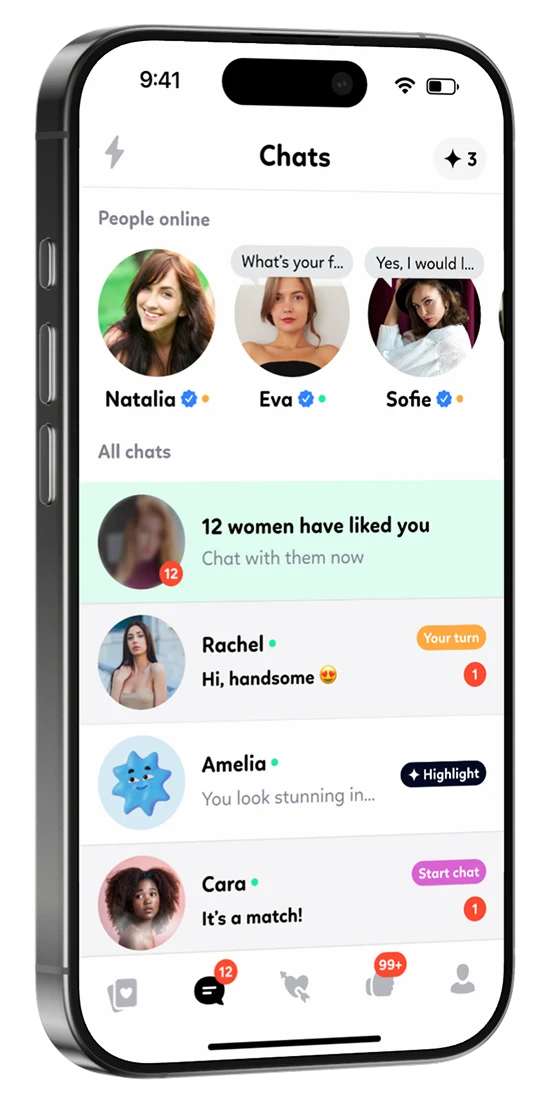
When dating feels like a guessing game, when you’re never sure what someone wants, or where it’s going, emotional safety disappears. That’s where Kismia makes a difference.
As Psychology Today notes, modern narcissists often thrive in digital spaces, where curated profiles, attention metrics, and filtered images can mask deeper emotional unavailability. Online, charm and confidence are easy to simulate, making early red flags harder to notice. That’s why transparent communication and verified profiles aren’t just conveniences, they’re emotional safeguards.
Kismia isn’t about finding the “perfect person.” It’s about helping you spot the right dynamics and avoid the wrong ones. When so many are still asking how to spot a narcissist when dating, or why they keep meeting emotionally unavailable people, this kind of intention makes all the difference.
If you’re ready for dating that doesn’t drain you, and connections that feel mutual from the start, try Kismia. Honest dating starts here.