



How to Stop Overthinking After Being Cheated On: 12 Tools That Actually Help

You check their phone. Just to ease your mind. Then you see it — a message that wasn’t meant for you. The tone, the name, the time — your chest tightens before you even finish reading.
Being cheated on doesn’t always hit like a loud confession. Sometimes, it creeps in through silence, strange energy, or something they forgot to delete. And once it happens, the noise doesn’t stop. Thoughts race, your body stays tense, everything starts to feel shaky, even your memory of what was good.
You’re not expected to forget what happened and you don’t have to. But if you’re looking for how to move on after being cheated on, this guide will give you small, steady ways to clear your head and feel like yourself again. Whether you’re trying to stay or thinking about walking away, there’s a way to move forward that doesn’t cost your peace.
Why Overthinking Happens After Infidelity
The moment you admit my boyfriend cheated on me or my fiancé cheated on me, your mind doesn't stop, it speeds up. Even after you know, you can’t let it go. You scroll, reread, rewind. You try to pin down the moment things shifted, thinking maybe you missed a clue.
This is more than mental noise, it’s what Affair Recovery calls “flooding”, when thoughts and emotions come so fast, your system doesn’t get a chance to reset. Your nervous system stays activated, scanning for danger, replaying details, jumping between facts and fears. It feels like you’re searching for the truth, but mostly, you're just stuck in the loop.
This is a common response when you’re trying to figure out how to heal after cheating. You want control, you want certainty, but at some point, if you’re serious about how to get over cheating, you’ll need to redirect that energy toward recovery, not research.
What Counts As Cheating? Context Matters
For some, it starts as a quiet doubt: “Can I say he cheated on me if it was only messages and secrets? If it never crossed a physical line, does it still count?” . The thing is, not every betrayal happens in bed. Cheating is less about one action and more about the erosion of trust. A secret doesn’t have to be physical to hurt.
Some common examples of cheating in a relationship include:
– Private chats they minimize or delete
– Emotional closeness that replaces intimacy with you
– Reaching out to an ex “just to check in”
– Lying about where they are, or who they’re talking to
If you feel constantly on edge, like something is being hidden, or like you’ve been quietly replaced, then your reaction is valid.
Stabilise First: The First 24–72 Hours
The first few days after you realize “my boyfriend cheated on me” or “my fiancé cheated on me” can feel unreal. You’re not sleeping, food tastes like nothing, your body’s in shock, and your brain keeps trying to replay everything, hoping it will make more sense the second time.
Right now, don’t make big decisions. Breathe, rest, and get through the next few days hour by hour. Don’t rush to make sense of it. Focus on feeling steady first.
Here’s what helps in the first 72 hours:
- Sleep, if you can. Use breathwork, white noise, or a warm shower. Even rest counts.
- Eat something grounding. Soup. Toast. Something simple. Trauma starves your brain.
- Tell one person. Not the whole group chat, just someone who can hold space.
In this window, your job is simple: survive the wave. How to deal with being cheated on starts with calming your system before you sort the story.
When you finally feel ready to open up again, a black people dating site can offer a fresh start with people who share your background
12 Tools That Actually Help With Overthinking
You’ve googled it: “how to get over infidelity”, “how to get over being cheated on”, but most advice feels vague or overwhelming.
Here’s something better: 12 clear, doable tools. Each one is a way to interrupt the chaos, set boundaries, and slowly return to yourself. Use 2–3 now, add more when ready. Healing isn’t linear, but it can be structured.
1. Morning & Night Grounding Routine
Start and end your day on your terms. A 5-minute routine — light stretching, deep breaths, no phone — helps lower anxiety levels and reminds your brain you’re safe.
Healing tip: Consistency tells your nervous system, "I’ve got this now."
2. Thought Labelling + Worry Window
Catch the thought. Label it: “story,” “fear,” “trigger.” Park it in a 15-minute “worry window” later in the day. Don’t let spirals hijack your whole life.
3. Fact vs. Story Worksheet
Write down what you know vs. what you assume. Was the message deleted? (Fact.) Does that mean he’s still lying? (Story.) Separate them to reduce the overwhelm.
4. Trigger Map + Response Plan
List the things that set you off — certain songs, places, Instagram likes. Then pre-decide how to respond. Do you close the app? Text a friend? Leave the room?
5. Boundaries Script
Need space? Need honesty? Write 2–3 sentences you can repeat if emotions run high: “I’m not ready to talk about this now.” “I need transparency going forward.”
6. Digital Hygiene
Mute their socials. Set a time limit for checking. No more deep dives at midnight. If your phone keeps dragging you back into loops, adjust it. WikiHow suggests small digital shifts that help, like turning off read receipts, hiding stories, or using blockers when your self-control runs low.
7. Values Check + Decision Lanes
Ask yourself: What are my non-negotiables? Am I staying out of fear, or hope? Create 30-day “experiments” to see what life feels like with or without them.
8. Somatic Discharge
Your body holds the betrayal. Move it out. Try a fast walk, short workout, dancing in your kitchen, or progressive muscle relaxation.
9. Safe-Other Calls
Pick 1–2 people you can text when the urge to snoop hits. They’ll remind you of reality and stop you from chasing answers that won’t help.
10. Sleep Guardrails
Cut caffeine by 2 p.m., no heavy convos after 9, and keep a “thought dump” notebook by your bed. Let your mind rest.
11. Structured Conversations (If Staying)
Trying to repair? Set up weekly check-ins with time limits and no interruptions. Structure gives hard conversations a safer shape. As TreatMyOCD suggests, try naming the distance if you’re staying but still feel disconnected. Silence often creates more damage than discomfort ever could.
12. Professional Support
Whether it’s trauma therapy or couples counseling, outside help works. Especially if the cheating partner shows real effort — not only apologies.
How Long Does It Take To Get Over Infidelity
There’s no universal number. Some people feel more stable after a few months. For others, it takes a year or longer to feel steady again.
Healing from betrayal takes time, but when you're ready to trust again, divorced dating platforms can offer a fresh start with people who value honesty
After being cheated on, your brain goes through stages: shock, anger, sadness, doubt, detachment, and, eventually, meaning-making. You might cycle through them more than once.
One hour you’re angry. The next, you miss them. Then you feel nothing at all. This emotional back-and-forth doesn’t mean you’re broken — it means your brain and heart are both trying to process what happened. Instead of looking at the calendar, look for signs of progress:
-
You’re not thinking about it every hour
-
You sleep better
-
You’re less reactive to triggers
-
You trust your own judgment again
If you're wondering how long does it take to get over infidelity, the answer depends on how safe, supported, and honest your current environment is. Healing doesn’t need to be fast, but it needs to be real.
Is He Still Cheating Or Just Guilty And Avoidant
After getting cheated on, it’s natural to wonder: Is he still lying? Or is he just pulling away because he feels ashamed?
Some signs may help you tell the difference.
Here’s what to look for if you’re asking how to know if he's cheating or trying to decode how a guy acts after he cheated:
Signals Of Ongoing Risk
-
Defensive when asked basic questions
-
Missing phone history or secretive app use
-
Gaps in timelines
-
Blaming you for “checking up”
Signals Of Real Repair
-
Open, consistent transparency
-
Clear, steady actions (not big emotional speeches)
-
Responsibility without pushing guilt onto you
Not every guy who gets distant is still cheating, but if there’s no openness, no clarity, and no follow-through, it’s fair to question what’s really going on.
Rebuilding Trust If You Choose To Stay
If your cheating partner shows real effort — not just guilt, not just words, but change you can feel, trust can be rebuilt.
It takes structure and care:
-
Transparency that feels safe, not invasive — openness about plans, access if needed, honesty without pressure.
-
Check-ins that create connection, not control. Accountability, not surveillance.
-
Time — clear moments to see if progress is real, not something you’re just hoping for.
You deserve to feel safe, not to tiptoe around someone’s mistakes. Healing after cheating means showing up differently — with honesty, care, and steady effort, day after day.
Rebuilding Self-Worth If You Choose To Leave
How to get over someone cheating on you starts with remembering what you deserve.
Grieve what was lost. Write down what this taught you. Make a no-contact plan if that’s what keeps you grounded.
Leaving doesn’t mean failure — it means choosing peace over chaos.
You don’t have to rebuild alone. Your energy matters. Your calm matters. Let that become the center again — the part that guides you as you move on and start to feel like yourself again.
When To Seek Professional Help Or Extra Safety
Some breakups feel devastating. Others feel dangerous. If being cheated on has triggered panic, deep depression, or fear, you don’t have to manage it alone.
In fact, many singles prefer using dating sites Indianapolis for more meaningful interactions.
Here’s when to seek outside help:
- You’re stuck in obsessive thoughts that won’t ease up
- You’re not eating or sleeping for days
- You feel unsafe emotionally or physically
- There’s manipulation, control, or verbal cruelty
A trauma-informed therapist can help with how to heal from being cheated on, especially if there’s emotional abuse layered into the relationship. There are free, confidential hotlines in most countries. Your safety matters more than closure.
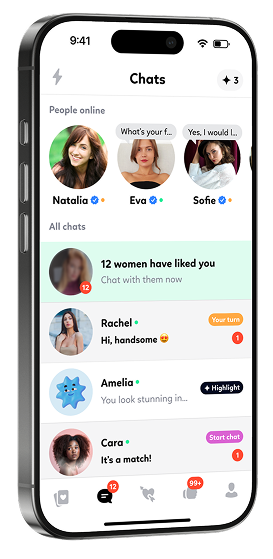
Why Some Singles Choose Kismia for Intentional Dating
After being cheated on, even the idea of matching with someone new can bring more tension than excitement. You’re not just asking who is this person? — you’re quietly wondering will I have to question everything again?
That’s exactly why some singles turn to Kismia, not for promises, but for peace of mind. From the start, Kismia lets you filter by values, relationship goals, and communication style. You’re not left decoding vague profiles or hoping someone “gets serious eventually.”
Here, intentions are visible. Profiles are verified. And boundaries aren’t something you have to fight for, they’re part of how things work.
When you're still carrying the weight of getting cheated on, clarity matters. You don’t need another partner who says the right thing and does the opposite. You need someone who aligns with you — emotionally, practically, honestly.
Kismia won’t tell you who to date, but it will help you avoid the emotional guessing game that often leads to the same heartbreak twice.
If you’re ready for dating that feels mutual from the start, Kismia gives you the tools to find it.
FAQ
How do I stop overthinking after being cheated on?
Wondermind describes overthinking after betrayal as survival mode — your brain loops not for drama, but for safety.
One simple way to interrupt it is the “Name–Pause–Park” technique: name the thought (“This is fear”), pause to breathe, and mentally park it for later instead of letting it take over your day.
How long does it take to get over infidelity?
There’s no fixed number. But there are signs:
– You stop checking their page every morning
– You sleep through the night
– You start to trust your own thoughts again
So if you're asking how long does it take to get over infidelity, track moments, not months.
Should I stay with a partner who cheated?
Look at their behavior. Not their guilt, not their promises, but their follow-through.
Do they take responsibility? Do they show change over time?
How to get past infidelity means you both work. Not just one of you explaining, apologizing, or waiting.
How do I know if he is still cheating?
You don’t need proof to notice what doesn’t add up.
If you feel like the truth keeps moving — like answers are vague or timelines blur, trust that discomfort. That’s often the body noticing what the mind is trying to explain away.
How to heal after being cheated on and lied to?
Start with the parts of yourself that got quiet in the relationship.
Boundaries. Routines. Joy. Wondering how to find peace after being cheated on? Make space for the version of you that doesn’t have to shrink to feel loved.
However you’re healing — quickly, slowly, or somewhere in between, the fact that you’re reading this means you’re already showing up for yourself. That matters.