



What’s My Love Language? A No-Test Guide to Finding Yours

The idea of “love languages” began in the early 1990s, when counselor Gary Chapman noticed that couples often cared deeply for each other yet kept missing the mark. One would say, “She never says she loves me.” The other: “But I do everything for her.” They weren’t cold or careless, just expressing affection in different love languages.
In his book The 5 Love Languages: How to Express Heartfelt Commitment to Your Mate, Chapman described five distinct ways people give and receive love. Modern therapists still reference his framework when helping couples reconnect. For example, Relate explains that love languages are simply ways people “show and interpret care” differently.
Today, many people ask online what’s a love language, hoping a quiz will reveal the answer. There’s so much information — lists, charts, scores — yet none of them know your story. This guide is different. The real work is to slow down, listen inward, and notice what a love language feels like for you — the one that shows up naturally in everyday moments.
What Is a Love Language? The Simple Idea
So, what is love language? In simple terms — it’s the way we express and recognize love. For some, it’s words; for others, time, touch, or quiet help. These are emotional habits, not fixed traits. When two people show affection differently, even kind intentions can feel like missed signals.
Understanding this means noticing what truly reaches you and what quietly slips past. Once you see your own patterns — how you give, what you crave, and what feels hollow, you can meet love halfway, instead of waiting for it to sound exactly like yours.
The Five Love Languages at a Glance
What are the five love languages? The idea comes from The 5 Love Languages official site, which explains them as five simple ways people express and recognize love:
-
Words of Affirmation – Appreciation expressed verbally: “I notice you”, “You matter”, “That was amazing what you did”.
-
Quality Time – Undivided attention, shared presence, meaningful interaction.
-
Acts of Service – Doing things that ease someone’s load: errands, chores, helping out.
-
Gifts – Thoughtful tokens, tangible reminders of affection and thought.
-
Physical Touch – Hugs, hand-holding, closeness, non-sexual and sexual, depending on the relationship.
Recent counselling research of Bethany Thornton Counselling notes that understanding your love language is less about theory and more about awareness of your emotional needs day-to-day.
No-Test Method: How To Find Your Love Language From Daily Life
You don’t need a quiz to figure out or to type “what is my love language?” into a search bar. You already have the clues in your everyday life. Watch what lights you up. Notice what stings. Pay attention to what you keep asking for but rarely get.
Your love language often hides in your patterns: how you show care when no one’s watching, and what you crave when you feel distant. Try this: write down moments from your week that made you feel connected or the opposite. You’ll start seeing your own map.
Notice What You Ask For Most
Another easiest way to uncover “what are my love languages?” is to listen to your own requests.
Do you say, “Can we just hang out tonight?” more than “I love you”? Maybe Quality Time matters most. Do you ask for help or small gestures? Maybe Acts of Service is your quiet anchor. When you catch yourself repeating a wish, no matter how small, it’s already a hint.
Spot What Hurts When It Is Missing
You can also pay attention to what hurts when it disappears. Maybe unread texts or cancelled plans feel heavier than they “should.” Maybe no touch for a few days leaves you distant, or lack of appreciation drains you.
Don't forget to look into dating sites for seniors over 60 as well.
The different types of love language often show themselves in absence: when the rhythm breaks. It means noticing the kind of connection that helps you feel steady and safe inside
The 5 Love Languages With Everyday Examples
Now that you know what are the different love languages, it helps to see them in motion, how they look in real life, not just in a book:
Words of Affirmation
What matters most is saying the real thing out loud, the words that actually come from you.:
-
“I noticed how hard you worked today.”
-
“You make mornings better.”
-
“Thank you for listening even when I ramble.”
Even a quick text like, “Thinking of you today” counts. For someone whose love language is words, sincerity matters more than volume.
Quality Time
Put your phone down. Walk together. Cook together.
Ask questions that go deeper than “How was your day?” If what my love language leans toward time, you’ll feel loved when someone is fully there. What matters isn’t the time you spend, but the presence you bring to it.
Acts of Service
If you’re asking yourself, “what’s my love language?” and love feels most real when someone helps or makes your day lighter, this one might be yours. Maybe you notice care in small things: a morning coffee waiting for you, a fixed light bulb, an errand quietly done.
This language shows love through action. People who connect this way often express affection before they say it — by noticing, preparing, and quietly easing life for someone they care about.
Gifts
This one is often misunderstood. Gifts as a love language aren’t about money; they’re about mindfulness. Someone with this top love language finds meaning in being remembered.
It can be a note slipped into your bag, a playlist made on a rough week, a coffee order waiting at your desk. When people think of different types of love language, they sometimes skip this one, but for many, tangible reminders of care make emotions feel real.
So if you light up at a surprise smoothie or a random postcard, that might answer your own “what is my love language?”
Physical Touch
Touch is the oldest language humans speak. A hand on your shoulder, a kiss before work, a hug that lasts one second longer than usual, it says “I’m here” when words fail.
For someone whose love language is touch, affection is as grounding as conversation. It doesn’t have to be romantic; it’s warmth, reassurance, safety. You might feel distance growing when physical closeness fades, even if everything else seems fine.
If you’ve ever thought, what's my love language? and your answer was “When they hold me, I just know”, this might be it.
How To Speak Your Partner’s Love Language
Once you understand what’s love language and how different people show affection, the next step is practice. You don’t have to change who you are, just learn to translate.
Each love language can be learned, like a skill. The key is paying attention. Instead of assuming your partner wants what you want, ask, “What makes you feel cared for lately?” That’s how love languages for women, men, and anyone else stop being theory and start being real.
Quick Wins For Each Language
Here’s one thing you can do today for each of the top love languages:
-
Words of Affirmation: Leave a short, specific note: “I love how you handle pressure.”
-
Quality Time: Put your phone on airplane mode for 30 minutes and just listen.
-
Acts of Service: Do one small task your partner usually does before they notice.
-
Gifts: Bring something that says, “I saw this and thought of you.”
-
Physical Touch: Initiate a hug without rushing it.
These gestures might seem small, but that’s the point, they meet people where they already feel love.
Services focused on cougar dating can provide tailored results.
Common Mistakes To Avoid
Even with good intentions, people slip up. You might keep giving your love language instead of theirs, like talking endlessly about feelings when they just wanted help with something practical.
Common pitfalls:
-
Overdoing your own style. If you love compliments, you might flood them with words when they’d prefer time.
-
Ignoring feedback. If your partner says, “I need more help,” hear it as data, not criticism.
-
Performative gestures. Gifts or words that feel forced miss the point.
The best thing you can do for any love language is make it personal, not perfect.
Women and Love Languages: Myths vs Reality
There’s a long list of clichés about women love language, that women want words, men want touch, and everything else is just guessing. But the connection doesn’t follow a formula. Every female love language grows out of experience, the way she learned to give, receive, or protect her feelings.
Refinery29 notes that gender stereotypes often blur the real picture. What defines someone’s language isn’t gender, but memory — the moments that shaped how she feels safe, seen, and understood.
If you’re trying to connect, skip the stereotypes. Notice what she asks for, how she shows affection, what makes her withdraw or relax and that’s your girls’ love language.
Reading Signals Without Stereotypes
Here’s how to decode anyone’s love language without assumptions:
-
Ask directly. “When do you feel most appreciated by me?”
-
Observe patterns. Watch what she repeats, what she avoids, what lights her up.
-
Adapt gradually. Don’t force a script; experiment.
Real connection doesn’t come from categories. It comes from curiosity. And curiosity is its own love language.
Do People Have More Than One Love Language?
Most people do. You might have a main one and a few quiet secondaries that show up depending on the season of life. That’s why you can’t answer what is my love language or once and never look again, it shifts.
When work drains you, Acts of Service may matter most. During loneliness, Physical Touch might move to the front. Stress changes priorities; context changes needs. That’s why the idea of different love languages helps, it gives you vocabulary for the small shifts you might not notice. As Verywell Mind points out, most people naturally use more than one language, and these preferences often shift with stress, routine, and time.
When Your Languages Clash
Every couple runs into mismatched rhythms. Maybe you express love through doing things (Acts of Service), but your partner speaks through words. You fix things; they talk things through. Both matter.
When your different types of love language collide, don’t force one to dominate. Instead, trade off: one week you speak theirs, the next week they try yours. Or bundle both: cook dinner (Acts of Service) and share it without distractions (Quality Time). Clashes are normal. What matters is translation, not conversion.
Texting Your Love Language (No Cringe)
Digital connection is a real connection when it’s thoughtful. You can express every one of the top love languages over text without sounding like a robot or a poet.
Small messages can carry warmth if you write the way you’d speak in person. You don’t need emojis to prove it, just presence.
Affirmation, Time, Service, Gifts, Touch — Text Examples
Words of Affirmation
“You crushed it today. Proud of you.”
“Still thinking about that thing you said — it stuck with me.”
Quality Time
“Can we do a call instead of texting tonight? I miss your voice.”
“Walk later? Just us, no notifications.”
Acts of Service
“Already handled the thing you were stressing about.”
“Don’t worry about dinner, I’ve got it.”
Gifts
“Check your doorstep :)”
“Saw this and thought of you.”
Physical Touch
“I wish I could hug you right now.”
“Saving that forehead kiss for later.”
Texting your love language doesn’t need to be performative. It just needs to sound like you.
Also, checking out South Dakota dating site can be helpful for finding compatible partners.
Limits of the Love Languages Framework
Even though the 5 types of love languages are helpful, they’re not the whole map. Culture, upbringing, neurotype, and attachment style all shape what makes you feel safe. Love languages are one tool, not a diagnosis.
The question isn’t just what are the five love languages, but how do they interact with your story? For example, someone who grew up with little affection might crave Physical Touch more, or struggle with it entirely. Someone with high independence might express love through Acts of Service more naturally than through closeness.
How To Use The Model Responsibly
-
Ask for consent. Don’t “analyze” your partner without permission.
-
Don’t scorekeep. Love isn’t an even trade; it’s a rhythm.
-
Stay curious. People change. So will their needs.
If you keep that in mind, the framework stays a bridge, not a box.
Why Some Singles Prefer Intentional Dating on Kismia
You don’t have to be in a relationship to care about your love language. It starts long before that — with how you talk, what you expect, and what kind of connection feels right to you.
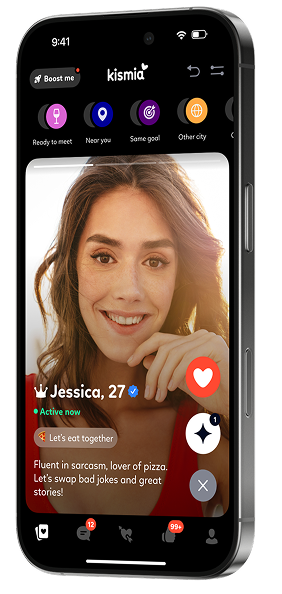
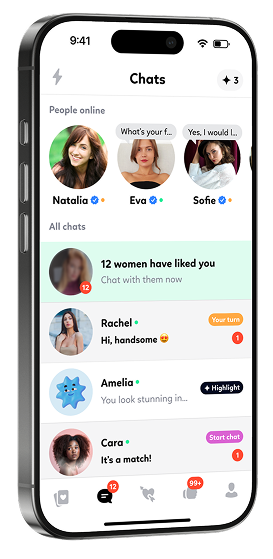
On Kismia, people are upfront about their intentions, whether they’re open to something light or looking for a deeper bond. That honesty makes it easier to notice when your top love languages align.
Because Kismia uses verified profiles and values transparency, it can make it easier to express your own needs — whether that’s Quality Time, Words of Affirmation, or simply honesty.
Knowing your love language is an advanced level of being “romantic”, it´s also about being intentional. Platforms like Kismia give you space to start that way.
FAQ
How can I find my love language without taking a test?
You don’t need a quiz to know what’s a love language that truly feels like yours. Pay attention to three clues:
-
What do you ask for most?
-
What do you miss when it’s gone?
-
What moments make you feel most safe?
Your answers often reveal one or more of your top 5 love languages, the ones that have been quietly shaping you all along.
Can my love language change over time?
Yes. Your different love languages can shift with context, stress, or life stage. Maybe you needed Words of Affirmation in your twenties and crave Quality Time now. Our needs evolve as we do.
What if my partner and I have different love languages?
Most people do. Having different types of love language doesn’t mean you’re incompatible — it just means you need translation. Try rotating gestures: a week focused on their love language, then one on yours.
You can even merge them — cooking dinner together (Acts of Service + Quality Time) or saying “thank you” with a touch (Words of Affirmation + Physical Touch). Blending creates balance.
Are there more than five love languages?
Some psychologists and writers suggest additions — like shared humor or emotional safety — beyond the five love languages. But clarity still helps. The 5 types of love languages are a strong foundation to understand patterns before expanding them.
You don’t have to choose between “classic” and “modern” — just stay open to what actually works in your relationship.
Do women have different love languages than men?
Not really. The idea that a women’s love language is mostly emotional and men’s is mostly physical oversimplifies things. It depends on personal history, not gender.
So instead of asking “what is a woman’s love language?”, ask “what makes her feel loved?” That’s the question that opens real connection.