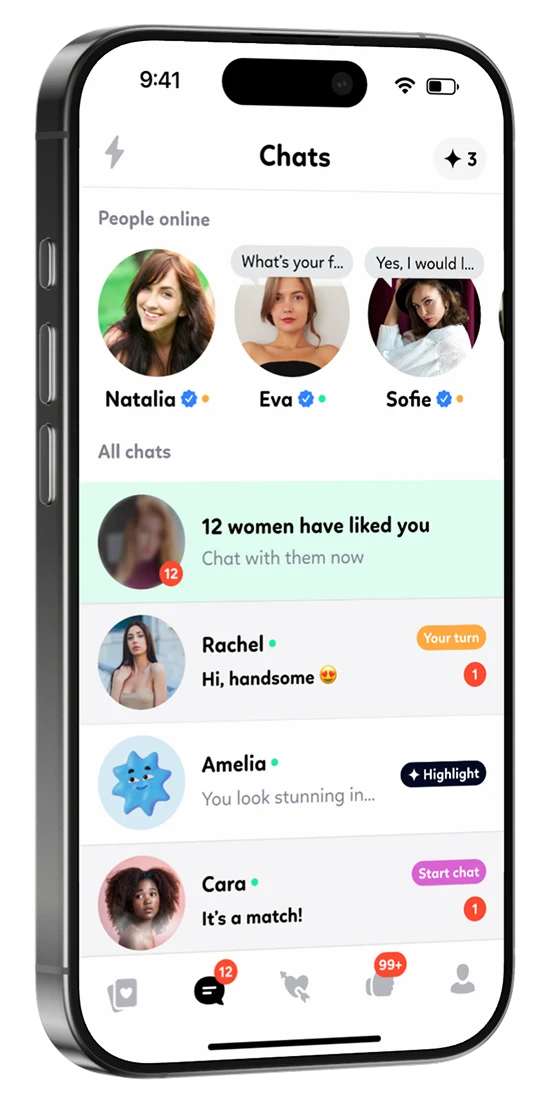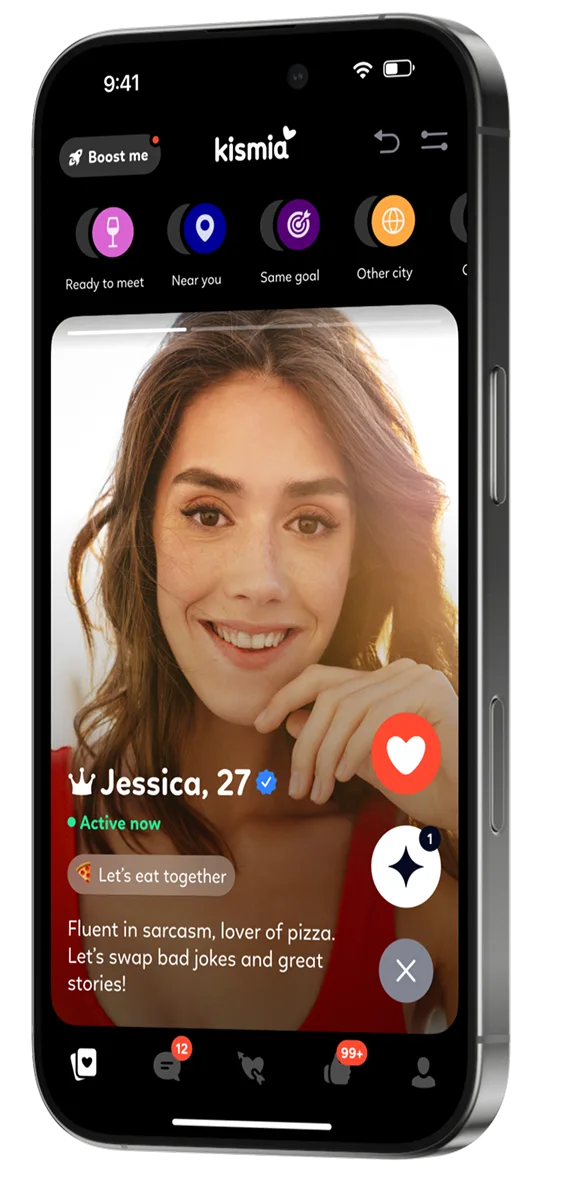





Looking for a spouse as a practising Muslim involves a set of considerations that a general dating site rarely accounts for. Family often has a say. Meetings may need a chaperone. The point of the whole exercise is usually marriage rather than an open-ended series of dates, and that changes how the first conversation should sound.
What follows is about the practical side of using a muslim dating site: what to put in a profile so that intentions are clear from the first screen, what the search tools on Kismia actually do, how to involve family without making it awkward, and where the risks sit. Nothing here is a religious ruling — practice varies by family, madhhab and country, and that is a conversation for your own community rather than a dating page.
What a muslim dating site changes in practice
The main difference is the assumed endpoint. On a general platform, "seeing where it goes" is a normal answer. In this context it usually is not, and stating that openly saves everyone time.
Three things tend to come up early, and they are worth writing down before you start:
- How you practise. Two people can both write "Muslim" and live very different weeks. Prayer, fasting beyond Ramadan, hijab, halal food outside the home, attendance at the masjid. The range is wide, and the label alone does not describe it.
- How family enters the picture. Some people prefer their family involved from the first serious conversation; others introduce them once things are clear between the two of you. Both approaches exist. Mismatched expectations here cause more friction than differences in practice do.
- Where you are willing to live. This ends more conversations than religion ever does, and usually surfaces only after weeks of talking. Better to say it early.
- What the timeline looks like. Some are ready to involve families within a month; others need a year. Neither is wrong, but the mismatch is expensive.
Worth noting that community demographics matter as much as any of this. Research from the Pew Research Center on Muslim populations has documented how concentrated Muslim communities are in a small number of metro areas in Western countries. If you happen to live outside those, the pool of practising single people your age within driving distance may be very small, which is the underlying reason online search exists for this group at all.
Writing a profile that states intentions clearly
On Kismia the profile completion bar fills in blocks, and the proportions surprise most people: three photos count for 25%, the "About me" section for 20%, and interests for another 20%. Text weighs as much as pictures. The typical profile does the reverse: five good photos and an empty description.
Specific language does the filtering that a religion filter cannot. "Muslim, family-oriented" fits half the site. "I pray five times a day, I only eat halal, and I would like my family involved once we are both serious" describes one person and screens out mismatches without a single awkward message. The reverse is equally useful: "I was raised Muslim, I am not strict about everything, but I want to raise children in the faith" answers a question that would otherwise hang in the air for three weeks.
One mechanical note about the part where most people stall. There are 16 ready-made icebreaker questions available to open with. Choosing one is easier than composing something from a blank field, and the other person receives an actual question rather than a greeting to acknowledge.
What the filters do and do not cover
Being precise about this matters, because the assumption is usually wrong: Kismia has no religion filter. In Discover, gender and age are the two filters available for free. The filter panel in search covers city, online status and verification, and comes with Premium, and the Nearby tab, which shows who is around right now, is part of Premium GOLD. Faith appears nowhere on that list.
What does help is the goal field, a separate block with mutually exclusive options: a serious relationship, starting a family, conversation and friendship, or undecided. It takes a second to set and it removes the category of misunderstanding that otherwise appears a month in. The Suitable tab then builds a shortlist from what you have filled in, interests and education and work included, which is another reason the text fields are not decoration.
Involving family without making it strange
A pattern that tends to work: keep the first two or three conversations between the two of you, confirm the basics — practice, location, timeline — and only then involve families. Introducing parents to someone whose stance on living abroad you have not asked about often creates pressure that neither of you needed.
When family does come in, a short honest summary usually lands better than a presentation. Where the person is from, what they do, how they practise, and what you have already agreed on. Anything you have not discussed yet is better named as not discussed yet.
If you are considering a spouse in another country, the logistics deserve their own planning; the notes on international dating cover what changes. And if you are in your thirties and the pressure from every direction has become its own problem, the page on dating over 30 may be a more useful read than anything about religion.
Safety and real profiles
A moderation team reviews profiles and photos and blocks suspicious ones, and automated systems flag behaviour that breaks the rules. Photo verification is optional and simple: the selfie it asks for is not published, it is only compared against the pictures already on the profile, and afterwards the grey tick beside the name turns blue. That tells you about one person, not about the whole database.
The risk specific to a marriage-focused search is the one nobody likes to name: money. Requests for help with a visa, a flight, a family emergency, a fee of some kind. The story varies and the pattern does not. No transfer to anyone you have not met in person, and urgency is a reason to slow down rather than to speed up.
Beyond that, the ordinary rules hold. Accounts are for adults, 18 and over. Reporting and blocking work at any point. Your address, workplace and anything financial can wait.
Getting started on Kismia
Registration, a profile and browsing cost nothing. You can message any Premium member for free — the green crown beside the photo marks them — and you can reply to anyone who writes to you first. Premium removes that limit; current prices depend on your country and the plan length and appear on the subscription page.
Kismia is a general platform rather than a service built for one community, which cuts both ways. The base is larger than any niche site, and the filtering work falls on your profile text instead of a checkbox. For a search that has marriage as its stated purpose, that trade is often the better one: a clear paragraph about how you actually live tends to be read more carefully than any filter would sort.