




Dating in your 30s is a different job from dating at 22. The mechanics look the same, and the stakes do not. You probably have a settled week, a job that expects you on Monday and a fairly clear idea of what you want from a partner. What you have less of is the thing that used to do the work for you: a steady supply of new people who show up without being arranged.
That single change explains most of the frustration. This page is about what actually shifts in this decade, what men and women in their 30s tend to write when they describe what they are after, and how the search works in practice on a site like Kismia.
What actually changes when you are dating in your 30s
Until the mid-twenties, meeting people is mostly a side effect of something else. University, shared flats, a first job with forty colleagues your own age, friends who keep bringing new friends. By the mid-thirties those channels quietly close. Colleagues are partnered, friends have small children and Friday plans get made three weeks ahead, if they get made at all.
The second shift is in the questions. At 22 the question is whether someone is interesting. At 34 it is closer to whether your lives fit: where you live, whether you want children, how much either of you can move, what you both do with money. Those are heavier questions and they surface earlier, which can make a third date feel like an interview.
It is worth putting the panic in context. The Census Bureau figures on marital status show the median age at first marriage in the United States drifting upward for half a century, and it now sits around 30 for men and just under 29 for women. Being unattached at 32 is not a late start by any current measure. It is the middle of the distribution.
Dating in your 30s as a woman and as a man
The two experiences differ less than the internet suggests, but the way people describe what they want does split in a few consistent places. What follows comes from the way profiles are usually written, not from claims about how men or women are.
Dating in your 30s as a woman
Timelines get named out loud. Profiles written by women in this decade often state the goal directly, whether that is a long-term relationship, children within a few years or explicitly no children at all. The tone tends to be less apologetic than it was at 25 and there is much less interest in guessing what someone means.
The second recurring theme is effort. A lot of descriptions ask for someone who replies properly, keeps plans and can talk about something other than work. That is not a high bar in principle. It reads as a filter because it does quietly exclude the people who treat messaging as a hobby.
Dating in your 30s as a man
Men in their 30s more often lead with what they have built: a career, a flat, a routine that works. What tends to be missing is the part that actually starts a conversation, which is any hint of what an ordinary Tuesday looks like. A profile listing three achievements gives the other person nothing to reply to.
The other pattern is a reluctance to name intentions. Leaving the goal vague feels safer, and it usually costs time on both sides, because the question arrives anyway in week three. Saying plainly that you are after something long-term, or that you are not sure yet, shortens the whole process.
Tips on how to use a dating website for singles over 30
None of this is complicated. It is mostly a matter of doing four unglamorous things properly.
Choose the right dating site!
If you want to find the best dating website for people over 30, look at who is actually on it in your area rather than at the marketing. Some services are built for one niche, which means a smaller pool that can work well if the niche is genuinely yours. General platforms give you a bigger pool and put more weight on how you describe yourself. Check what the free version lets you do before you decide.
Make a detailed profile
Take this step seriously, because the weights are not what most people assume. On Kismia the completion bar fills in blocks: three photos are worth 25%, the "About me" section 20% and interests another 20%. Text carries as much as pictures. Write about your actual week, your work and what you do with a free Sunday, and skip the adjectives that would fit anyone.
Be clear about your needs and expectations
The goal field takes one tap and prevents a fair share of misunderstandings: a long-term relationship, starting a family, conversation and friendship, or not sure yet. Say the awkward things in the profile rather than on date two. Whether you have children, how far you are willing to travel, how soon you want to meet in person.
Communicate
Openings matter more than they should. There are 16 ready-made icebreaker questions for the evenings when you have nothing left to compose, which removes the worst part of this, the blank box after somebody has typed "hi". Ask about something specific in the profile and the reply rate tends to change immediately.
Why join a dating site in your mid-30s
By 35 the argument for doing this online is mostly logistical. The pool of people you meet by accident has shrunk, your evenings are booked further out and the introductions that used to arrive through friends have slowed to a couple a year. Four things tend to make the difference, and none of them require you to enjoy the process.
It's convenient and easy
You can do it from the sofa with a phone, in twenty minutes, without arranging an evening around a maybe. For anyone whose week is already full, that is the practical argument. Signing up, building a profile and browsing cost nothing.
No limits in terms of location
Most platforms have members across many countries, so your search is no longer bounded by the people you can physically bump into. If you are open to distance, international dating is worth a look, and if you are starting again after a marriage ended, the way people approach dating after divorce may be closer to your situation.
Higher chances to find your soulmate
The arithmetic is the honest part of this heading. A city circle of forty acquaintances refreshes slowly, while a dating site puts you in front of people you would never otherwise cross paths with, and most of them joined because they want a relationship rather than a night out. Bigger pool, better odds. It shifts the numbers in your favour, which is not the same thing as a promise.
An unforgettable experience
Some of it will be tedious and some of it will be funny. People in their 30s tend to be direct, which makes conversations shorter and usually more pleasant than the same conversations a decade earlier. A few of the people you talk to may end up as friends rather than partners, and that is a reasonable outcome rather than a failure.
How the search actually works on Kismia
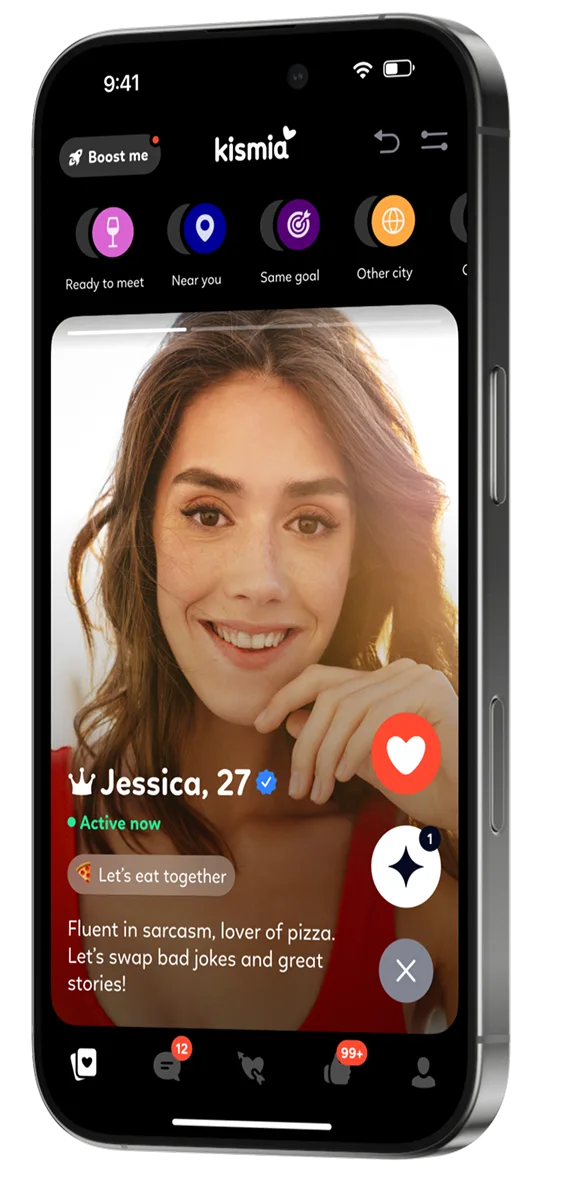
Discover is a card feed: swipe or tap the heart. Two settings are free there, gender and age, and for a first look at who is around that is usually enough. Age is the one that matters most on a page like this, since it lets you keep the feed inside the range you actually want.
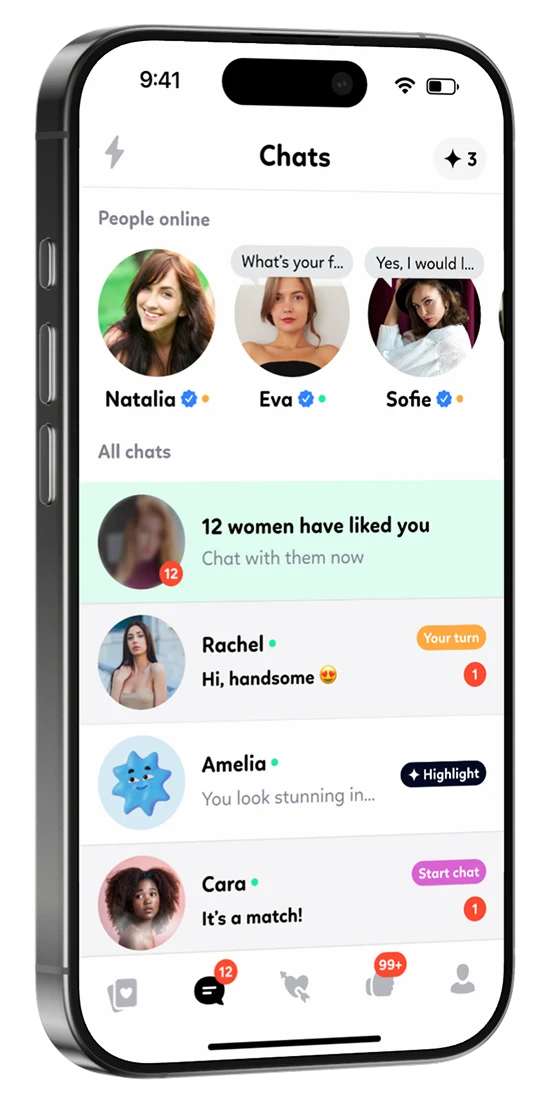
Narrowing further happens in search, where the full filter panel covers city, online status and verified profiles, and that panel is part of Premium. The Nearby tab, included in Premium GOLD, shows who is around you right now. Messaging has a limit before you upgrade, with two exceptions: you can write freely to any Premium member, marked by a green crown beside the photo, and you can reply to anyone who contacts you first.
On safety, the useful parts are ordinary. Photo verification is optional, and once someone completes it the small grey tick beside the name turns blue, which tells you about that person and nothing about the rest of the database. Reporting and blocking work against any account at any moment. Registration is for adults only, 18 and over.
The rest is patience. A profile that says something true about your week keeps working while you are at the office, and the conversations that go anywhere tend to start from a detail somebody actually read.