




Searching as a Christian single narrows things in a way that is easy to describe and hard to act on. You are not looking for anyone; you are looking for someone whose Sunday looks something like yours, and whose plans for a family rhyme with your own. That filter is real, and it makes the pool smaller.
What follows is about working with that instead of hoping around it: how to put your faith into a profile so the right people recognise it, how to read it in someone else, and what the search tools on Kismia actually do.
What changes when faith is part of the search
Two people can both write "Christian" and live very different weeks. One goes to a service every Sunday and sings in the choir; another was baptised as a child and has not been back since. Neither is wrong, but they are not looking for the same thing, and the word on its own does not tell them apart.
The practical differences usually sit in three places: how often you actually attend, how much of your social life runs through a congregation, and how you talk about marriage and children. Denomination matters too, though often less than people expect — a Catholic and an evangelical who both attend weekly may have more in common day to day than two Catholics with opposite habits.
Religion also tends to be a bigger factor in long-term matching than in first impressions. Research from the Pew Research Center on religion and family life has tracked how often couples share a faith and how that shifts across generations; the broad pattern is that shared practice, more than shared label, is what people describe as mattering once a relationship is serious.
Writing a profile that says what you believe
On Kismia the completion bar fills in blocks, and the weights are worth knowing: three photos are worth 25%, the "About me" section 20%, and interests another 20%. Text carries as much as pictures. Most people do the opposite — five photos, empty description.
Specific beats declarative. "Christian, family-oriented" could describe half the site. "I go to the 9am service at my parish, I help with the youth group on Wednesdays, and I would like a family eventually" describes one person, and it filters honestly in both directions. The people who are put off by it were never a match.
The same works in reverse. "I grew up in a Baptist family, I don't attend regularly now, but faith still shapes how I think about marriage" is a useful sentence. It saves two weeks of polite conversation heading nowhere.
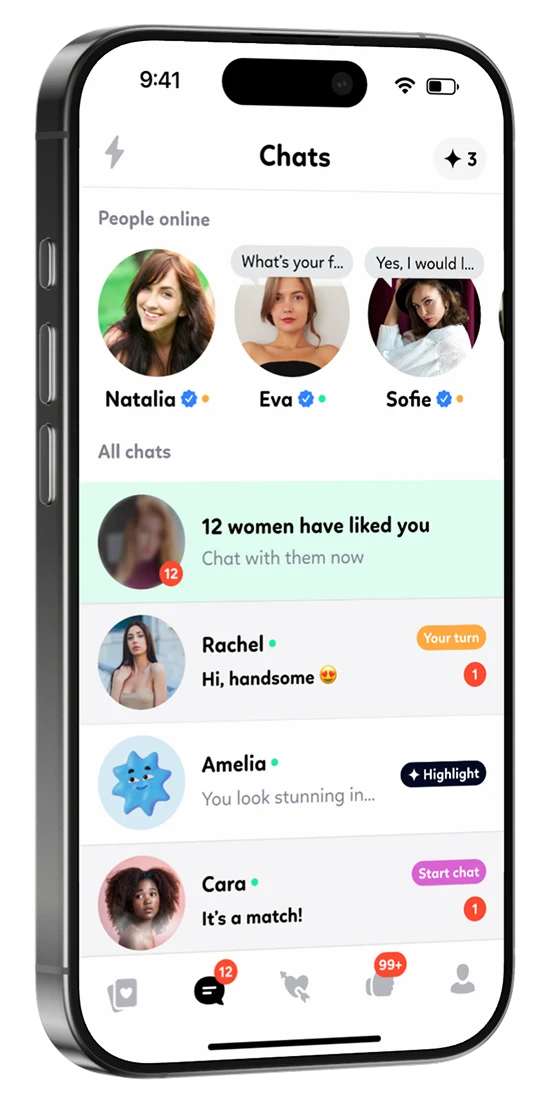
One practical note for the part that usually stalls people: there are 16 ready-made icebreaker questions to open with. Picking one is easier than composing something from a blank box, and it gives the other person a concrete thing to answer rather than a greeting to acknowledge.
Where faith actually shows up in a profile
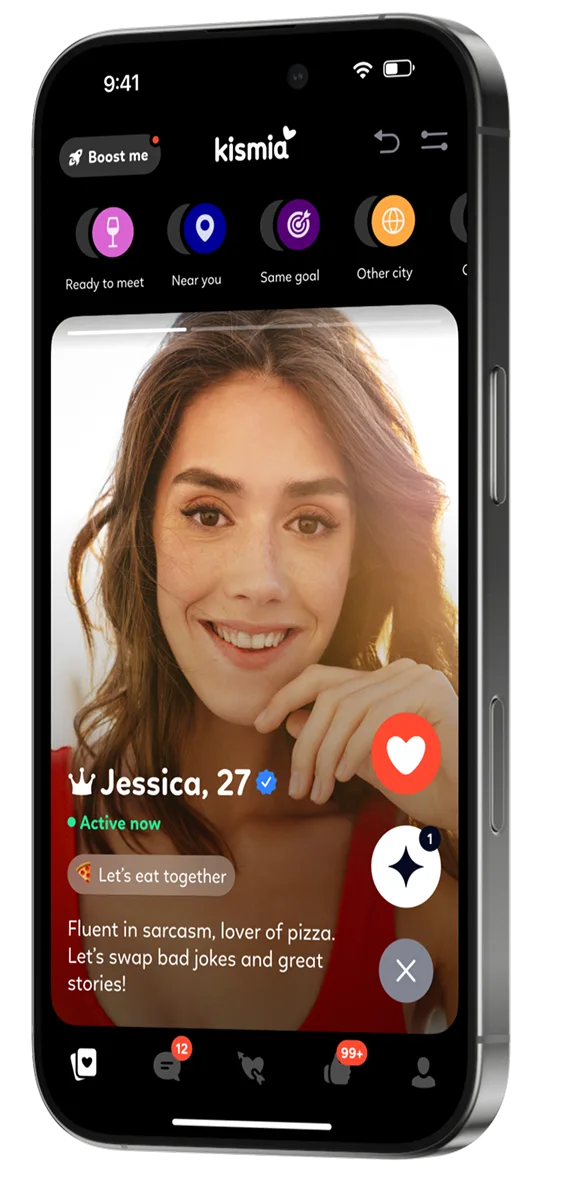
Worth being clear about the mechanics: Kismia has no religion filter. The filters cover gender and age in Discover, then city, online status and verification in search. Faith is not among them, so everything depends on what people write about themselves and what you read. That is a limitation, and it is also why the description matters more here than on a general search.
The goal field helps with the other half of the question. Four options are available to pick from: a long-term relationship, starting a family, conversation and friendship, or not sure yet. It takes a second and it prevents a familiar kind of misunderstanding.
Meeting people from your own church, or beyond it
Congregations are still where a lot of couples meet, and there is nothing wrong with that. The problem is arithmetic: a parish of two hundred contains a handful of single people in your age range, most of whom you have known for years.
Church events help, in a limited way. A regional retreat or a young-adults group in the next town widens the circle by a few dozen people, which is a real gain when the starting number is five. The catch is frequency. They happen a handful of times a year, and they rarely fall in the months when you actually feel like meeting someone.
Online widens that without replacing it. Discover works as a card feed with two free settings, gender and age, which is enough for a first look at who is around. To narrow by area, the full filter panel — city, online status, verified profiles — comes with Premium, and the Nearby tab in Premium GOLD shows who is close right now. The Suitable tab builds a shortlist from what you have filled in, interests included, which is another reason to write the description properly.
If your search runs across borders rather than across town, the same principles apply with more patience about logistics — see how international dating tends to work. And if you are starting again after a marriage ended, that has its own rhythm; the notes on dating after a divorce are worth a read.
Safety and real profiles
Profiles are reviewed manually by a team, and automated systems together with moderation flag behaviour that breaks the rules. Photo verification exists and is optional: the selfie it asks for is never published, it is only compared with the pictures already on the profile, and the small grey tick beside the name turns blue once it is done.
A blue tick tells you about one person, not about the whole database. That is still useful information, especially before a first meeting that involves a drive. Blocking and reporting work at any point, the Safety Center collects the basics, and accounts are for adults only, 18 and over.
Getting started on Kismia
Signing up, filling in a profile and browsing cost nothing, and you can chat freely with any Premium member — look for the green crown beside their photo. Most people here are looking for something lasting; others start with friendship and see where it goes, and the tools work either way.
Whether you think of it as a Christian singles dating site, a faith-based service or simply a general platform where you are honest about what you believe, the approach holds: write the specific version of your faith, not the label, and let the conversation do the rest.