



Most advice written for bigger women about dating online is either a pep talk or a diet plan in disguise. Neither helps much. Not at eight in the evening, when the actual task is deciding which three photos to upload and how to word a description that sounds like a person rather than a disclaimer.
This page is the practical version. What the term BBW dating covers and where it came from, how to write a profile that does not read as an apology, how to spot the two types of message that waste the most time, and what the search tools on Kismia can and cannot do about any of it.
What BBW dating means, and what it does not
BBW stands for "big beautiful woman". The abbreviation came out of online communities in the 1990s and it now does double duty: for a lot of people it is simply a search term, and in some corners of the internet it carries a fetish connotation. Both uses are live, which is why the same three letters can bring a warm message and a creepy one in the same hour.
Worth being clear about the practical consequence. Searching the term will show you niche sites built entirely around body type, and general platforms where body type is one attribute among many. The niche option sounds more targeted and often is not, because a smaller base concentrates the fetish traffic rather than diluting it. On a general platform the ratio tends to be better, and the filtering work moves into your profile text.
Weight stigma in dating is documented rather than imagined, and it is not a personal failing to have noticed it. The Rudd Center for Food Policy and Health publishes research on how weight bias operates across settings, including social and romantic ones. Knowing that the bias is structural is useful mostly because it stops the conversation from turning inward: the problem is not that you have not tried hard enough.
Photos and a profile that is not an apology
Two habits show up constantly in profiles and both cost matches. The first is the angled selfie taken from above, cropped at the collarbone, in every single photo. The second is a description that pre-empts rejection: "I am not skinny, if that is a problem keep scrolling". It reads as a warning label. Worse, it makes the reader feel like a suspect before they have written a word, which is a strange way to open.
The mechanics are on your side more than you might expect. On Kismia the completion bar fills by block: three photos are worth 25% of it, the "About me" section 20%, and interests another 20%. Text carries as much as pictures. So a good description compensates for having fewer photos you actually like, which is the usual constraint rather than the exception.
What actually goes in the three photos
One full-length picture, taken at eye level, in clothes you would wear to meet someone. It removes the question that otherwise gets asked in message four, and it removes the people who were going to ask it badly. The other two do the ordinary work. Your face, clearly. You doing something you like.
For the description, concrete beats defensive. "Plus size, love to laugh" tells nobody anything. "I run a book club, I am at the pool most Sunday mornings, and I want something that lasts" describes one person. If your first message tends to be the hard part, there are 16 ready-made icebreaker questions to open with, which is easier than staring at an empty box.
The two messages worth filtering out early
The first type is the fetish opener. It usually arrives fast, it is complimentary in a way that is about a body rather than a person, and it skips everything else. The tell is that nothing in the message references anything you wrote. Block, report, move on — there is no version of that conversation that improves.
The second type is subtler and more common: the person who is interested but treats your size as the topic. Questions about whether you have tried losing weight. Reassurance you did not ask for. Compliments framed as exceptions, which are not compliments. This one is sometimes fixable with a direct sentence, and often is not. Either way you can decide that early rather than after a month.
Reporting and blocking work at any moment on Kismia, and the platform's rules cover harassment and hate. Using them early is maintenance, not overreaction.
What the search tools can and cannot do
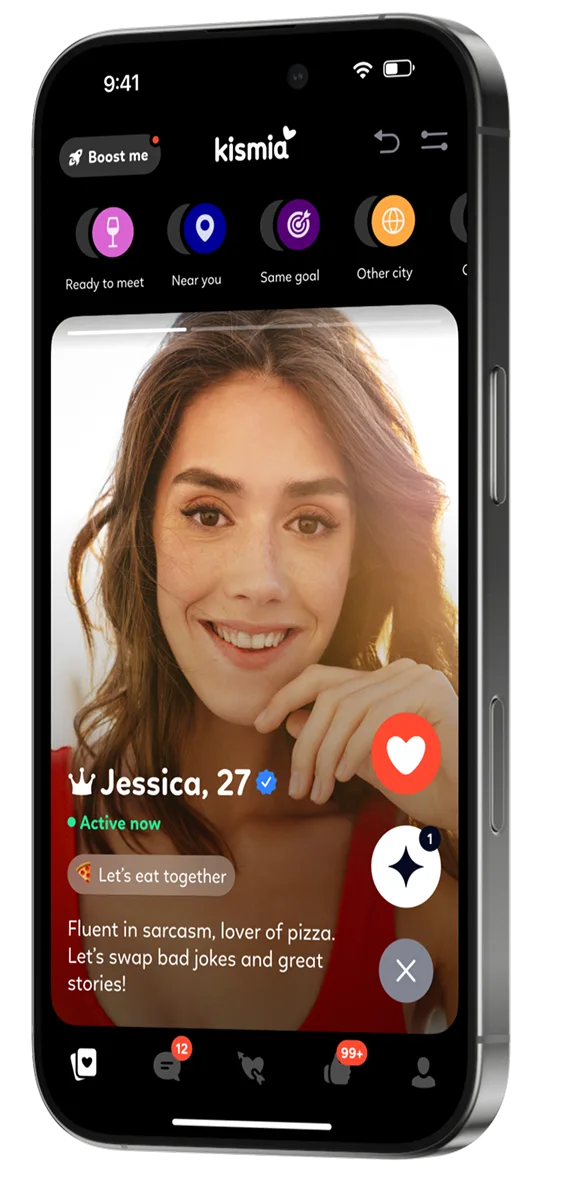
Being precise here, because the assumption is usually wrong: there is no body-type filter on Kismia. In Discover, gender and age are the two filters that come free. The filter panel in search covers city, online status and verification, and it is part of Premium; the Nearby tab, which shows who is around at that moment, belongs to Premium GOLD.
The goal field is the one that does real work for this search. It has mutually exclusive options: a serious relationship, starting a family, conversation and friendship, or undecided. Setting it takes a second. It removes a large share of the mismatch that otherwise surfaces three weeks in, once both people have already invested attention they cannot get back. The Suitable tab then assembles a shortlist from what you filled in, interests and work and education included.
Dating again after a marriage ended has its own practicalities, and the notes on dating after divorce cover them. And if the age question is sitting alongside this one, the page on dating over 30 is the more relevant read.
Safety and real profiles
Profiles and photos are reviewed by a moderation team, suspicious ones get blocked, and automated systems flag behaviour that breaks the rules. That lowers the share of fakes. It does not turn the base into something fully verified, and any platform claiming otherwise is worth reading sceptically.
Photo verification is optional and worth doing. The selfie it asks for is never published; it is compared with the pictures already on your profile, and the grey tick beside your name turns blue afterwards. It also tends to change who writes to you, because the same badge is what you look for in other people. Accounts are 18 and over. First meetings belong in public places, and your address and workplace can wait.
Getting started on Kismia
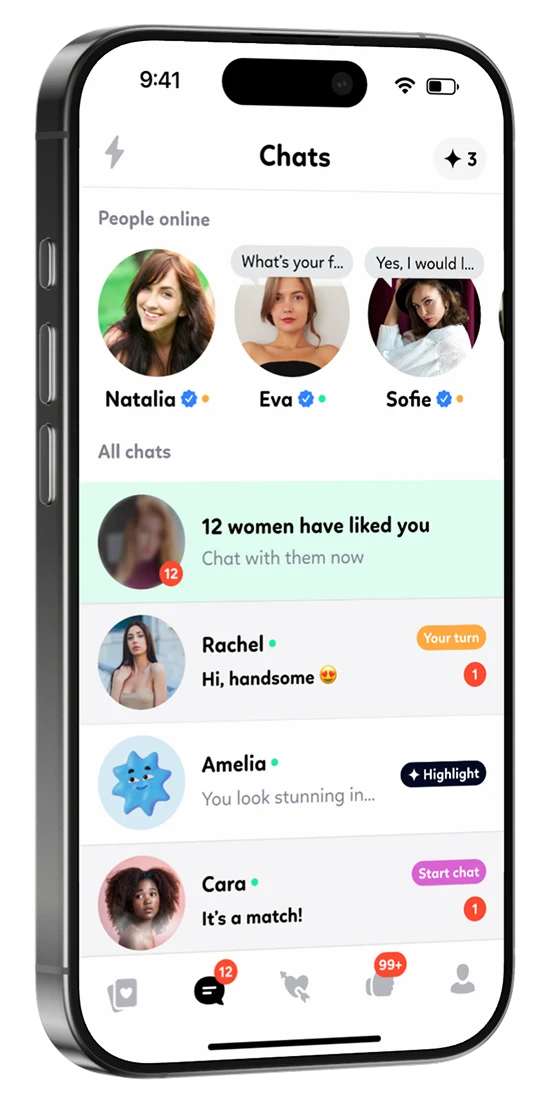
Signing up, building a profile and browsing cost nothing. You can message any Premium member for free, marked by the green crown next to the photo, and reply to anyone who wrote to you first. Premium lifts that limit; prices depend on country and plan length and are shown on the subscription page.
One last practical point. Plenty of people on a general platform are looking for a partner and have no strong opinion about body type at all, which is a category that niche sites structurally cannot show you. Writing plainly about who you are and what you want is what puts you in front of them.