




Most advice about interracial dating spends its length on one conversation: the one with your family. It's a reasonable place to start. It's also fairly late in the sequence.
The things that tend to shape how a relationship goes sit earlier than that, and they're more practical. Where you're looking. Whose opinion in your life actually tracks with how long couples stay together. What you put in writing before anyone meets anyone. What follows is that list, with the numbers behind it.
How Common It Is Now
It helps to start with scale, because the tone of most writing on the subject assumes something rarer than the numbers describe.
In 1967, 3% of newlyweds in the United States married someone of a different race or ethnicity. By 2015 that figure was 17% — close to one in six. Two generations, and the practical questions here have become fairly ordinary ones.
The average does hide some variation worth knowing about. Among Black newlyweds, men married outside their race at roughly twice the rate of women: 24% against 12%. Among Asian newlyweds it ran the other way, with 36% of women and 21% of men. Same year, same country. So if dating apps have felt noticeably easier or harder for you than for a friend, some of that gap is likely structural rather than anything about either of you.

Where You Look Changes the Odds
One number here is more actionable than the rest. Among US newlyweds living in metro areas, 18% married across race or ethnicity. Outside metro areas, 11%. That gap has more to do with who lives within reach of whom than with anyone's openness, which makes it one of the few items on this list you can adjust today.
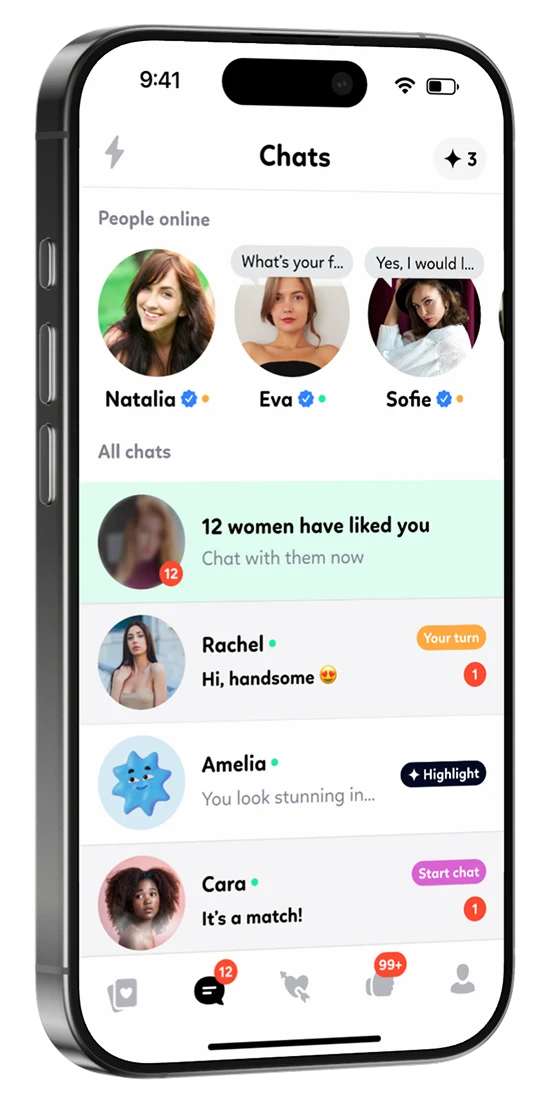
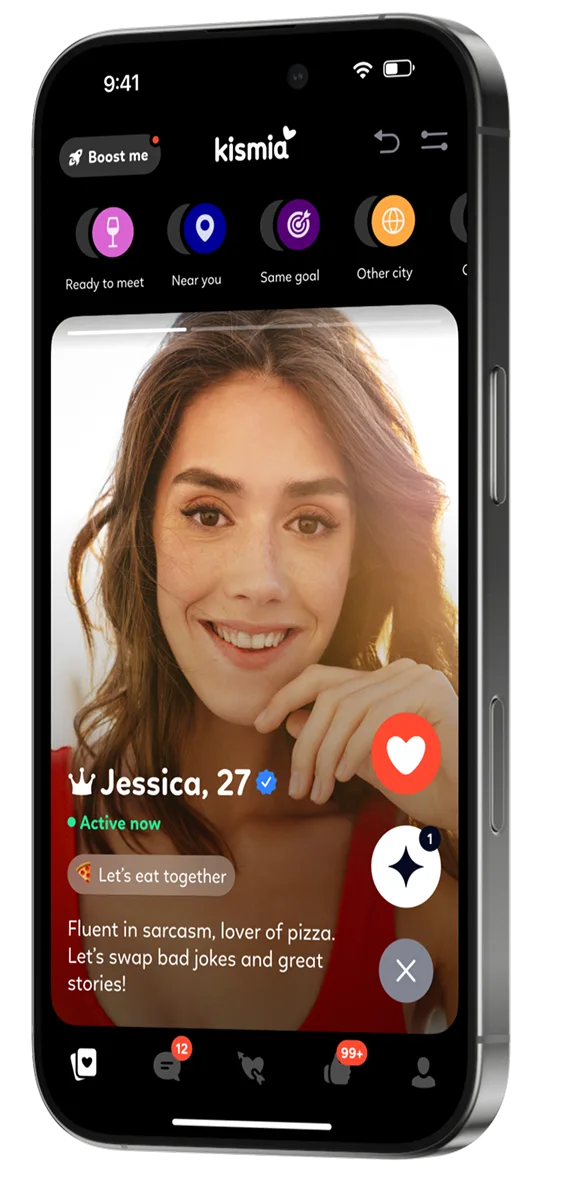
In practice it means searching wider than your own town. On Kismia the All tab in Search is open to everyone, with filters for city, gender, age, online status and verification. Browsing costs nothing, so ten minutes of looking before you write anything will usually tell you more about a city than a week of guessing. Nearby, which finds people around you at that moment, and global search both sit in Premium; the city setting does not, which makes it the cheapest adjustment available to you.
City pages are open as well, if you would rather look before creating anything at all — dating in Chicago is one of the busier ones.
The Approval Worth Paying Attention To
This is the part of the usual advice that can be gently reordered rather than argued with.
Approval has been measured. A study of 757 people in intercultural relationships looked at three sources separately — family, friends, and society in general — and compared each one against how satisfied and how committed those people reported being.
Friends came out strongest on both counts. Family approval mattered too, though less, and mainly in the earlier stretch of a relationship; among couples who had been together longer it no longer tracked with either measure. Approval from society at large did not track with either one at any stage.
None of which makes a difficult parent any easier. What it suggests is a different order of attention. If your own circle is one where introducing this person would be something of an event, that is worth looking at early — and it usually sits closer to your influence than a parent's view does.
What Belongs in a Profile Early
Most of what decides whether two people fit lives in prose, not in fields. Whether someone has children. Whether they want them. What they are actually looking for, and whether they have done any of this before. Which is a good argument for filling in the parts of a profile people usually skip.
On Kismia the completion bar is weighted and the weights are fixed: registration 15%, photos 25%, email confirmation 20%, the main information block 28%, interests 12%. That main block covers relationship status, children, smoking, drinking, education and work — the largest single share of the bar, and the one most often left half done.
It also does something less visible. The Suitable tab assembles its list algorithmically from profile data, education and work included, so filling those in changes who turns up in it.
Two smaller things are worth the minute they take. There are sixteen ready-made icebreaker questions, which help if a blank first message is the thing that stops you. And photo verification is optional, which is part of why the badge carries weight with someone reading a stranger carefully.
Where to Start
Creating a profile and looking around cost nothing, and if a Premium member writes to you first you can reply for free. So the low-commitment version of all this is to set the city wide, read for ten minutes, and decide afterwards.
If you would rather see a particular market before signing up for anything, the city pages are open — dating in Atlanta and dating in Houston are both worth a look. Most people here are after something long-term, and the matching tools work the same whether you arrive with a type in mind or without one.